Showing posts with label Bhutan. Show all posts

Friday, May 17, 2013

National Butterfly of India

Last updated: 24th May 2013
[This is work in progress and to be updated soon with more details]

A few years back, I remember discussing with few friends that why don't we have invertebrate taxa as National symbols rather than just having Tiger and Peacock. Recently same topic was raised by some members on ButterflyIndia yahoo group. Over past week or so, many ideas are being shared and discussed.

First thing I did was to take a quick look around, to see if some countries actually have "National Butterflies" designated. I was pleasantly surprised to see that our neighbors Bhutan and Srilanka have done so in recent years.

National Butterflies of Countries

Bhutan Ludlow’s Bhutan Glory (Bhutanitis ludlowi)


Sri Lanka  Sri Lanka Birdwing (Troides darsius)

Source: Wikipedia

Malaysia Rajah Brooke's Birdwing (Trogonoptera brookiana)

Source: Wikipedia

Japan Japanese emperor (Sasakia charonda)

Source: Wikipedia


Costa Rica Blue Morpho (Morpho menelaus) *
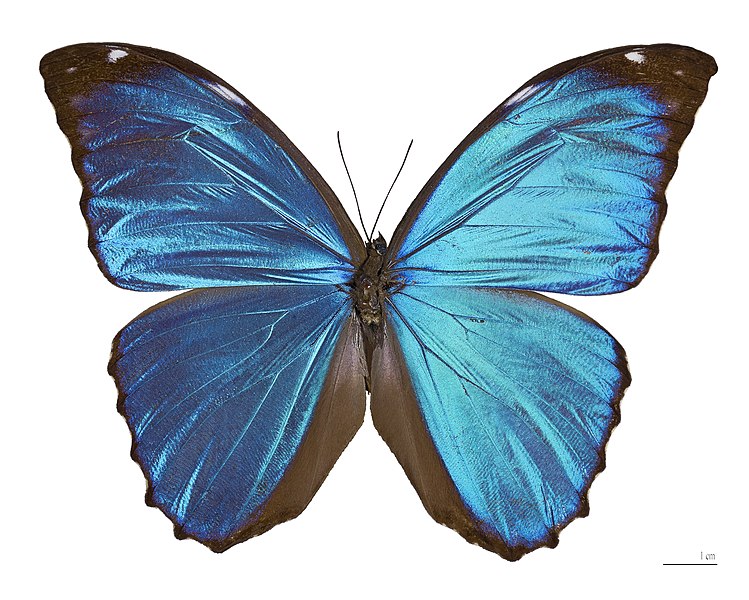
Source: Wikipedia

* Source of information doubtful

[If you know of any more, please share the information in comments section and I would update it here.]

As for India, most people seem to agree that we do need a designated National Butterfly. Now the question is what should it be? Very quickly members have started sharing the view and ideas, including candidate species.

Mr Anuj Jain shared his experience with similar process currently in Singapore. 

Mr. Maan Barua has been working on flagship species and has worked on particularly flagships for invertebrate conservation (Barua et. al. 2012) using butterflies. 

Criteria

  • Beautiful / Colorful
  • Common throughout
  • Endemic
  • easy to recognize
  • Conservation status / conservation action

Proposed Species (so far)

  • Kaiser-i-hind (Teinopalpus imperialis
  • Common Mormon (Papilio polytes)
  • Common Rose (Pachliopta aristolochiae)
  • Crimson Rose butterfly (Pachliopta hector)
  • Peacock Royal (Tajuria cippus)
  • Common Jezebel (Delias eucharis)
  • Paris Peacock (Papilio paris)
  • Krishna Peacock (Papilio krishna)
  • Malabar Banded Peacock (Papilio buddha)
  • Blue Nawab (Charaxes schreiber)
  • Southern Birdwing (Troides minos)
  • Blue Pansy (Junonia orithya)
  • Five-bar Swordtail (Graphium antiphates)
  • Blue Mormon (Papilio polymnestor)
  • Yellow Gorgon (Meandrusa payeni)
  • Common Birdwing (Troides helena)
If you have more suggestions on species, criteria for selection or any other suggestions, please leave comment on the blog.

References:
  • Barua, M., Gurdak, D. J., Ahmed, R. A., & Tamuly, J. (2012). Selecting flagships for invertebrate conservation. Biodiversity and Conservation. doi:10.1007/s10531-012-0257-7

Monday, August 1, 2011

‘Bhutan Glory’ spotted in Ziro


Arif Siddiqui
ITANAGAR, July 10: Bhutan Glory–a rare and beautiful butterfly of the region– was discovered in Arunachal Pradesh.
This three tailed insect which is generally found in Bhutan, Southeast Asia and other Northeastern states was unknowingly discovered by Punyo Chada of Siiro village, a teacher by profession and an avid nature lover, in Ziro recently.


Listed under CITES (Convention on International Trade in Endangered Species of Wild Fauna and Flora, also known as the Washington Convention), but not in the Red Book of the IUCN (International Union for Conservation of Nature and Natural Resources), the status of the butterfly has been recorded as rare by some authorities and "Insufficiently known" in the IUCN Red Data Book on Swallowtails.

Both sexes of the Bhutan Glory are identical in looks, having long rounded forewings with convex termen and many-tailed hind wings. This fine insect was first discovered in May 1868, near Buxa, in the Bhutan Himalayas, at an elevation of 5000 feet, by Dr R. Lidderdale, of the Bengal Army. Dr Lidderdale obtained two specimens from the same locality in 1872.

Bhutan Glory flies at tree-top with a slow, drifting, unpredictable flight. It’s transparent greyish underside makes it difficult to distinguish in the shadows. During rain, it sits on leaves with the fore-wings dropped over the hind wings, concealing its bright upper coloration. The butterfly has a habit of hill-topping and visits flowers of diverse species.  Apart from teaching, Chada, runs a Home Stay accommodation for visitors. He is also an avid nature lover and often visits Talley Valley with his friends in his leisure time.

Apart from Bhutan Glory he has shot another rare butterfly “Brown Gorgon.” There so many unknown moths & wild flowers in his collection which were witnessed by this author during his stay at his home.
He has opened the Gateway of “Butterfly Tourism” in Ziro.
Isaac Kehimkar, the famous author from BNHS (Bombay Nature History Society) already started asking for his pictures for upcoming Book on Indian Butterflies being published by BNHS.

Chada’s Butterflies pictures made a stir among the butterfly enthusiasts across the country and many are now willing to visit Ziro valley soon.

Tuesday, September 15, 2009

Rare butterfly sighted after 100 yrs

KOKRAJHAR: Deep within the graveyard of butterflies, there moves a flutter of hope. And the awestruck nature-lover, bewildered at the miraculous triumph, captures a quick moment of the blithe spirits flight for posterity.

Kushal Choudhury, a young lepidopterologist and lecturer at Kokrajhar Science College, has spotted a rare breed of swallowtail butterfly considered extinct at Ultapani Reserve Forest. The jungle, under Haltugaon forest division, is notorious for being the deathbed of hundreds of these winged creatures.

Choudhury, who has been working on a butterfly project since 2002 and is researching on swallowtail butterflies for his PhD since 2008, said, "The Yellow Crested Spangle (Papilio Elephenor Doubleday) was resighted after a long gap of 100 years in Ripu-Chirang Wildlife Sanctuary (RCWS) that extends between 89:554-90:304E and 27:154-26:354N in the Bodoland Territorial Council of western Assam.''

He added, "The sanctuary is a transitional zone between Manas Tiger Reserve in the east and Buxa Tiger Reserve (West Bengal) in the west. It also has strong linkages with Bhutan Biological Conservation Complex as it is located just at the foothills of Phipsu Wildlife Sanctuary and Royal Manas National Park of Bhutan.''

At first, Choudhury believed that it was a mutated spangle butterfly (Papilio protenor) that is similar in size and colour. The yellow markings on the abdomen and the bright yellow head were the most striking and peculiar features of this butterfly. He then circulated the photographs on ButterflyIndia@yahoogroups.com; an e-group for butterfly watchers around the world. It was finally identified and confirmed as the Yellow crested Spangle by Krushnamegh Kunte, post-doctoral research fellow at FAS centre for systems Biology, Harvard University.

"The Yellow Crested Spangle belongs to the Genus Papilio under the family Papilionidae. Papilio elephenor is a highly endangered, federally protected species listed under Schedule I of the Indian Wildlife (Protection) Act, 1972, and is placed under the Endangered (EN A1c, B1 2bc) category of the Red Data list of IUCN (Gupta et al, 2005),'' the lepidopterologist said.

The butterfly is also endemic to the eastern Himalayas and northeastern India. Butterfly exeprts like Bingham (1907), Evans (1932) and Winter-Blyth (1957) have described the presence of this butterfly in Assam and Nagaland and Khasi Hills about 100 years ago, but there has been no recent report of its sightings or documentation till now.

Choudhury has also discovered another butterfly, called Moores cupid (Shijimia moorei Leech, 1889, old name Everes moorei). It is a tiny butterfly and its flight is very fast compared to its size. Choudhury said, "It is also an extremely rare butterfly under the Lycaenidae family. It is mainly found in Japan and southern China. Several decades earlier, its presence was reported from Meghalaya's Khasi hills after which, it was not reported from anywhere else in India. This species is also listed in Schedule I of the Wildlife (Protection) Act, 1972 and categorized as Critically Endangered (CR A1c, B1 2bc) in the IUCN Red Data list''.

Story

Tuesday, August 11, 2009

More than 350 new species discovered in Himalayas

More than 350 new species of animals, fish and plants have been discovered in one of the world's "most biologically rich areas" over the last decade, conservationists said today.


New species discovered in fragile Eastern Himalayas
Among the discoveries are a bright green frog (Rhacophorus suffry) which uses its red and long webbed feet to glide in the air Photo: WWF

But the Eastern Himalayas, a region spanning Bhutan, Nepal, Tibet, north eastern India and the far north of Burma, is also one of the areas most under threat from climate change, a report by WWF warns.

It is feared the impacts of a warming climate, such as melting glaciers and flooding, will exacerbate existing environmental threats including logging, overgrazing, the wildlife trade and pollution.

Already only a quarter of the region's original habitat, which includes the lowland home of Asian elephants, clouded leopards, cobras and geckos and the high northern region where snow leopards, red pandas and blue sheep are found, remains.

The region harbours 10,000 plant species, 300 mammals, 977 bird species, 176 reptiles and 269 types of freshwater fish, has the highest density of the Bengal tiger and is the last bastion of the greater one-horned rhino, WWF said.

But some 163 species are globally threatened with extinction, the Eastern Himalayas – Where Worlds Collide report warns, with 14 of them critically endangered.

In the last 10 years, 244 new plants, 16 amphibians, 16 reptiles, 14 fish, two birds and two mammals – a macaque monkey and a miniature muntjac, the oldest and smallest species of deer – have been discovered.

When scientists first spotted the "leaf deer", they thought it was a juvenile of another species but DNA tests confirmed it was a distinct and new species.

The discoveries of 353 new species, which also included a bright green frog, which uses its red webbed feet to "fly" through the air and species of orchids, poppies and bamboo, puts the area on a par with Borneo as a hot spot for new wildlife.

The Eastern Himalayas are also the site of the discovery of the oldest fossil gecko species known to science, the 100 million-year-old gecko, found in an amber mine in the far north of Burma.

Mark Wright, WWF's conservation science adviser, said: "These exciting finds reinforce just how little we know about the world around us.

"In the Eastern Himalayas we have a region of extraordinary beauty and with some of the most biologically rich areas on the planet.

"Ironically, it is also one of the regions most at risk from climate change, as evidenced by the rapid retreat of the glaciers, and only time will tell how well species will be able to adapt – if at all."

The WWF report calls for a number of measures to protect the environment of the Eastern Himalayas, and the people that live in and depend on the region for their food, fresh water and livelihoods.

The study urges Bhutan, India and Nepal to work together for a region-wide vision for conservation and sustainable development and to tackle wildlife crime.

It also calls for efforts to support communities to cope with the impacts of climate change and says development such as hydropower schemes and tourism ventures must take the environment into account.

The conservation charity is also calling for governments meeting in Copenhagen in December for talks on a new climate change global deal to commit to a reduction in emissions of 40% by developed nations by 2020, compared to 1990 levels.

Mr Wright said: "There is no room for compromise on this issue; without these cuts the Himalayas face a precarious future – impacting both the unique wildlife and the 20% of humanity who rely on the river systems that arise in these mountains."

Story