| Roopak Goswami |

Limenitis rileyi. Picture courtesy: British Natural History Museum, London
Guwahati, Jan. 31: A butterfly, spotted in Arunachal Pradesh nearly three decades back, has been finally described as a new species.
The Limenitis rileyi Tytler was sighted by London-based naturalist Purnendu Roy in Upper Dibang Valley district in 1987, and has now been reported in the current issue of Journal of Threatened Taxa. "This sighting of L. rileyi represents the first record of this species from India, thus adding to India's butterfly fauna," the article says.
The species was previously recorded in southeast Tibet, Myanmar and northern Vietnam.
Roy had found a single male specimen on July 19, 1987, at a height of around 1,800 metres near Anini in Upper Dibang Valley in a wet sub-tropical broad-leaf forest.
A neighbouring subspecies, L. rileyi xizangana Huang, was recorded in southeast Tibet in 1998. The Dibang Valley record lies between southeast Tibet and northeast Myanmar records and fills a gap in the distribution. No subspecies determination has been made because of the sample size of one. Records of L. rileyi from southeast Tibet and northeast Myanmar indicate a flight period of June to August at altitudes between 1,600m and 2,400m.
"When I collected the butterfly back in 1987 in Upper Dibang Valley, there was no freely available literature to identify this species. Even now it is not illustrated on the Internet to my knowledge. H.C. Tytler unfortunately did not illustrate the species when he described it in 1940 from northeast Myanmar. At the time it was bit of a dead end for investigation so I had left it tentatively identified to a related species L. mimica that occurs in Myanmar and China.
"In 2012, my partner Jo persuaded me that I should spend more time on butterflies again. After hearing about the work of Sanjay Sondhi of Titli Trust, I contacted him and offered to assist in the surveying of moths and butterflies at Pakke tiger reserve and Eaglenest wildlife sanctuary. It was after that trip that I decided to approach the British Natural History Museum, London, to assist in identifying what I could not identify in 1987. David Lees identified the species as L. rileyi. He also recognised that another specimen I had was not described before, which I named Callerebia dibangensis in 2003," Roy told The Telegraph.
He said the butterfly is found in wet sub-tropical Montane forests at around 1,800m. Such areas can be inaccessible in monsoon owing to landslides and with frequent rains it can be a lottery to observe butterflies. Consequently, species that fly in monsoon like this species, maybe overlooked, he added.
Roy said habitat loss is the greatest risk to any species. Where the species was collected, the forest is quite fragmented and so locally could be at risk. There are larger forests where it may be less at risk but these are quite inaccessible or in protected areas. "I think it is essential that local biodiversity is conserved and that we are not just left with islands of biodiversity, inaccessible to most people and more vulnerable. For the lower forests, the proposed Dibang Valley dam is a major threat. Despite being initially rejected by the forest advisory committee in 2013, it has been given the go ahead again and some of India's finest forests will be destroyed," he said.
|
Showing posts with label butterflies. Show all posts
Showing posts with label butterflies. Show all posts
Wednesday, February 1, 2017
New butterfly, spotted three decades back

Wednesday, December 11, 2013
Research sheds light onto the debut of insect life on Earth
LAWRENCE — “Insects dominate our world,” according to University of Kansas researcher Michael Engel. Thus, anything scientists can learn about the evolution of insects leads to a better grasp of how biology in general has changed over time.

“More than half of all known species on the planet are insects, and they rule virtually all terrestrial and freshwater ecosystems,” said Engel, a professor of ecology and evolutionary biology. “Many insect lineages are ecologically ubiquitous — such as bees, ants, termites — and they impact our daily lives in a big way. They pollinate our crops; they are the sources of many of our medicines or other chemicals; and some are tied to the spread of disease.”
Understanding the factors that led to insect origins and fueled their successes, as well as what pushed particular groups to extinction, such as the influence of climate change, is vital to human health and security.
Engel has just co-authored a paper in the prestigious journal Nature that sheds new light on the evolution of the Eumetabola, a scientific term for the group of organisms that includes most insect species.
“Beetles, bees, ants, wasps, flies, butterflies, moths, fleas, lacewings, lice, thrips, aphids, true bugs and all of their close relatives are eumetabolous insects,” said Engel. “If you are talking about insects, then you are likely talking about a eumetabolan insect.”
The researcher, who also serves as a senior curator at KU’s Biodiversity Institute, said that in spite of the importance of this group of insects, their earliest origins have been difficult to pin down.
“There’s been a lack of identifiable fossils from the Carboniferous Period or earlier deposits,” Engel said. “Until now, the first definitive specimens assignable to the Holometabola, the big chunk of the already massive Eumetabola, were from the early Permian — but those aren’t the most primitive of their kind, except in a few cases, and pointed to much earlier diversification events. From the Carboniferous, the immediately preceding time period, we only had specimens of much more primitive insect lineages. “
The size of the fossils makes them difficult to detect, according to Engel.
“They’re tiny, so unless you are hunting for them, they would be easy to overlook,” he said. “Also, fossils from these deposits aren’t preserved with a strong contrast between them and the surrounding rock. Thus, it takes specialized lighting to get them to easily pop out.”
Nevertheless, Engel and his co-authors in Nature describe newly discovered specimens and fragments that can be confidently tied to holometabolan lineages. More significant, the specimens are not of the typical orders but are far more primitive.
“For example, there’s a species related to the lineage that eventually would give rise to the wasps in Triassic,” he said. “It wasn’t a wasp itself and instead would look more like some kind of generalized primitive group, but it already had a few of the evolutionary novelties that would later be part of the order of wasps, ants and bees.”
Among the other five species Engel and his colleagues describe in Nature, one is an early relative of true bugs and their relatives; one is an early relative of barklice, and then ultimately true lice; and one is an early relative of the lineage that would give rise to the beetles in the Permian.
KU is a leader in paleontology generally, and Engel’s lab is one of a few worldwide with expertise in the fossil record of insects — and, among those labs, an even smaller subset have sufficient expertise in the Paleozoic.
Engel said an understanding of ancient development and origins of insects is vital for an understanding of our modern world.
“Our own evolution — biotic and cultural — is inextricably woven into the lives of insects,” he said. “Insects have been on the planet for at least 410 million years and were first to fly, first to develop agriculture and first to form complex societies. We like to talk about the ‘Age of Dinosaurs’ or the ‘Age of Mammals,’ but all of these are greatly dwarfed by an overarching ‘Age of Insects.’ If humans vanished from the Earth it would have only a beneficial effect on the greater biota. If insects disappeared, then life itself would struggle to persist.”
Original Story
“More than half of all known species on the planet are insects, and they rule virtually all terrestrial and freshwater ecosystems,” said Engel, a professor of ecology and evolutionary biology. “Many insect lineages are ecologically ubiquitous — such as bees, ants, termites — and they impact our daily lives in a big way. They pollinate our crops; they are the sources of many of our medicines or other chemicals; and some are tied to the spread of disease.”
Understanding the factors that led to insect origins and fueled their successes, as well as what pushed particular groups to extinction, such as the influence of climate change, is vital to human health and security.
Engel has just co-authored a paper in the prestigious journal Nature that sheds new light on the evolution of the Eumetabola, a scientific term for the group of organisms that includes most insect species.
“Beetles, bees, ants, wasps, flies, butterflies, moths, fleas, lacewings, lice, thrips, aphids, true bugs and all of their close relatives are eumetabolous insects,” said Engel. “If you are talking about insects, then you are likely talking about a eumetabolan insect.”
The researcher, who also serves as a senior curator at KU’s Biodiversity Institute, said that in spite of the importance of this group of insects, their earliest origins have been difficult to pin down.
“There’s been a lack of identifiable fossils from the Carboniferous Period or earlier deposits,” Engel said. “Until now, the first definitive specimens assignable to the Holometabola, the big chunk of the already massive Eumetabola, were from the early Permian — but those aren’t the most primitive of their kind, except in a few cases, and pointed to much earlier diversification events. From the Carboniferous, the immediately preceding time period, we only had specimens of much more primitive insect lineages. “
The size of the fossils makes them difficult to detect, according to Engel.
“They’re tiny, so unless you are hunting for them, they would be easy to overlook,” he said. “Also, fossils from these deposits aren’t preserved with a strong contrast between them and the surrounding rock. Thus, it takes specialized lighting to get them to easily pop out.”
Nevertheless, Engel and his co-authors in Nature describe newly discovered specimens and fragments that can be confidently tied to holometabolan lineages. More significant, the specimens are not of the typical orders but are far more primitive.
“For example, there’s a species related to the lineage that eventually would give rise to the wasps in Triassic,” he said. “It wasn’t a wasp itself and instead would look more like some kind of generalized primitive group, but it already had a few of the evolutionary novelties that would later be part of the order of wasps, ants and bees.”
Among the other five species Engel and his colleagues describe in Nature, one is an early relative of true bugs and their relatives; one is an early relative of barklice, and then ultimately true lice; and one is an early relative of the lineage that would give rise to the beetles in the Permian.
KU is a leader in paleontology generally, and Engel’s lab is one of a few worldwide with expertise in the fossil record of insects — and, among those labs, an even smaller subset have sufficient expertise in the Paleozoic.
Engel said an understanding of ancient development and origins of insects is vital for an understanding of our modern world.
“Our own evolution — biotic and cultural — is inextricably woven into the lives of insects,” he said. “Insects have been on the planet for at least 410 million years and were first to fly, first to develop agriculture and first to form complex societies. We like to talk about the ‘Age of Dinosaurs’ or the ‘Age of Mammals,’ but all of these are greatly dwarfed by an overarching ‘Age of Insects.’ If humans vanished from the Earth it would have only a beneficial effect on the greater biota. If insects disappeared, then life itself would struggle to persist.”
Original Story
Saturday, May 18, 2013
Indian Arhopala + 753 species pages on the Butterflies of India website
India has a staggering 49 species of Arhopala (Oakblues). Many of them have not been seen in recent decades, and many of them have never been photographed. We have been slowly and steadily building a collection of Indian Arhopala on the Butterflies of India website, and now we have 20 species represented:
http://ifoundbutterflies.org/367-arhopala-dp2
These include Animish Mandrekar’s only second record of the species Arhopala curiosa (Curious Oakblue) in the world and the first record of the species from India:

ifoundbutterflies.org/367-arhopala/arhopala-curiosa
And Shantanu Joshi’s only 2nd record of the species Arhopala dispar (Frosted Oakblue) from India:

http://ifoundbutterflies.org/367-arhopala/arhopala-dispar
We have also crossed 750 species pages on the website (currently at 753). They are listed here in a reverse chronological order:
http://ifoundbutterflies.org/species-pages/history-of-species-pages-on-butterflies-of-india-website
For the past few weeks we have been uploading 200 images per week, so we are making progress on that front as well. Do let us know if you have any interesting or good images to upload on the website, especially if they are going to add species to the website. This will make the website more widely useful.
Friday, May 17, 2013
National Butterfly of India
Last updated: 24th May 2013
[This is work in progress and to be updated soon with more details]
[This is work in progress and to be updated soon with more details]
A few years back, I remember discussing with few friends that why don't we have invertebrate taxa as National symbols rather than just having Tiger and Peacock. Recently same topic was raised by some members on ButterflyIndia yahoo group. Over past week or so, many ideas are being shared and discussed.
First thing I did was to take a quick look around, to see if some countries actually have "National Butterflies" designated. I was pleasantly surprised to see that our neighbors Bhutan and Srilanka have done so in recent years.
National Butterflies of Countries
Bhutan Ludlow’s Bhutan Glory (Bhutanitis ludlowi)

Sri Lanka Sri Lanka Birdwing (Troides darsius)

Source: Wikipedia
Malaysia Rajah Brooke's Birdwing (Trogonoptera brookiana)

Source: Wikipedia
Japan Japanese emperor (Sasakia charonda)

Source: Wikipedia
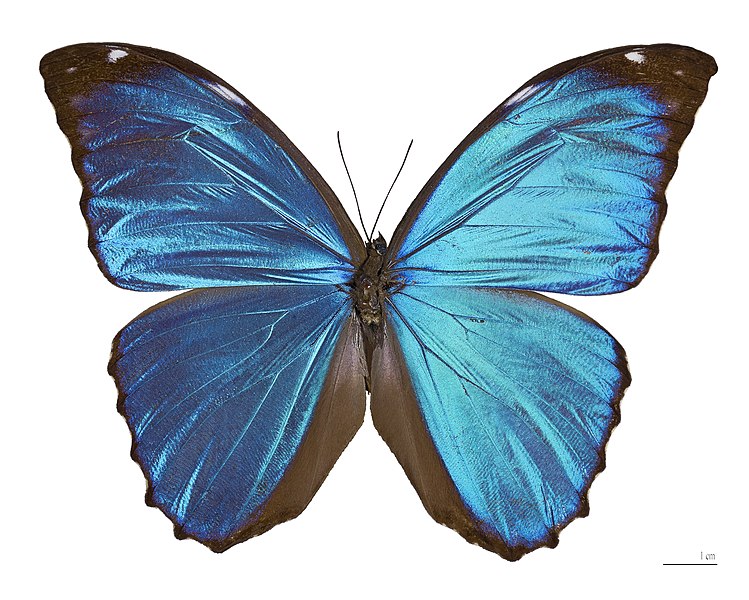
Costa Rica Blue Morpho (Morpho menelaus) *
Source: Wikipedia
* Source of information doubtful
[If you know of any more, please share the information in comments section and I would update it here.]
As for India, most people seem to agree that we do need a designated National Butterfly. Now the question is what should it be? Very quickly members have started sharing the view and ideas, including candidate species.
Mr Anuj Jain shared his experience with similar process currently in Singapore.
Mr. Maan Barua has been working on flagship species and has worked on particularly flagships for invertebrate conservation (Barua et. al. 2012) using butterflies.
Criteria
- Beautiful / Colorful
- Common throughout
- Endemic
- easy to recognize
- Conservation status / conservation action
Proposed Species (so far)
- Kaiser-i-hind (Teinopalpus imperialis)
- Common Mormon (Papilio polytes)
- Common Rose (Pachliopta aristolochiae)
- Crimson Rose butterfly (Pachliopta hector)
- Peacock Royal (Tajuria cippus)
- Common Jezebel (Delias eucharis)
- Paris Peacock (Papilio paris)
- Krishna Peacock (Papilio krishna)
- Malabar Banded Peacock (Papilio buddha)
- Blue Nawab (Charaxes schreiber)
- Southern Birdwing (Troides minos)
- Blue Pansy (Junonia orithya)
- Five-bar Swordtail (Graphium antiphates)
- Blue Mormon (Papilio polymnestor)
- Yellow Gorgon (Meandrusa payeni)
- Common Birdwing (Troides helena)
If you have more suggestions on species, criteria for selection or any other suggestions, please leave comment on the blog.
References:
- Barua, M., Gurdak, D. J., Ahmed, R. A., & Tamuly, J. (2012). Selecting flagships for invertebrate conservation. Biodiversity and Conservation. doi:10.1007/s10531-012-0257-7
Thursday, May 16, 2013
Video : Temporal study of Chrysalis Development
I came across this 3-D scans of a butterfly chrysalis video on Google+ and was amazed by the work done using Micro X-ray technology The research opportunities are limitless with these new techniques.
Development throughout the metamorphosis process is seen so nicely. Enjoy.
Thanks to Ed Young for sharing this.
The complete article explaining this is on National Geographics
Development throughout the metamorphosis process is seen so nicely. Enjoy.
Thanks to Ed Young for sharing this.
The complete article explaining this is on National Geographics
Saturday, October 1, 2011
Lower pollinator numbers herald crisis
A
decline in the number of butterflies and bees, major contributors
toward global farm output, calls for urgent conservation steps
Ananda Banerjee, ananda.b@livemint.com
Red Pierrot, Common Lime, Plain Tiger, Blue Pansy or the Common Castor may be unfamiliar names to most Indians, although it is likely that most would have seen one or more of the five—the most common butterflies found in India.
While it is unlikely that most people would notice their absence, it is almost certain that plants will—butterflies, such as these, help them reproduce.
The subcontinent has approximately 1,300 of more than 20,000 butterfly species known, said Kishen Das, a US-based lepidopterist. That’s about 6.5% of the global butterfly diversity.
However, the problem is that around 100 of the butterfly species found in India are nearing extinction, according to Surya Prakash, a professor at the department of life sciences at Jawaharlal Nehru University. “Few are aware of the crucial pollination role the butterfly plays, which is second only to the honeybee,” he adds.
There’s bad news on that front too.
“Our observations in the Sundarbans have established that the population of bees as pollinators is decreasing,” says K. Venkataraman, director, Zoological Survey of India.
Pollination is the process that helps plants reproduce. From the consumption point of view, it is also the process that produces fruits, vegetables, pulses, and grains—any food, basically, that comes from a plant.
Around 70% of all food crops are pollinated by insects, according to the Food and Agriculture Organization. In Europe, the proportion is 84%. While no corresponding data is available for India, there’s nothing to suggest that food crops here are pollinated by other means. This means that a decline in the number of pollinating insects could have catastrophic effects.
“If human beings were to disappear tomorrow, the world would go on with little change, but if insects were to disappear, I doubt the human species could last more than a few months,” wrote noted American biologist E.O. Wilson.
The impact of some insects becoming extinct isn’t top-of-the-mind in a country where even conservation efforts are skewed towards large mammals, or mega-fauna, as Isaac Kehimkar, general manager (programmes) at the Bombay Natural History Society and author of The Book of Indian Butterflies, terms it. “Lack of knowledge and obsession with mega-fauna is killing entomology as a subject. It has become professionally unsustainable today as there is a fight for the same set of funds which inevitably go to the tiger or one of the mega-fauna species,” he says.
To be fair, the emphasis on conserving pollinating insects is relatively recent, even in the US. These insects not only support humanity, but also maintain diversity in an ecosystem. “Though there has been a growing appreciation for the ecosystem services provided by pollinators, it is only recently, when farmers in the US started finding their bee colonies missing, that people started wondering about what might happen to the world’s food production in the absence of bees,” says S. Ramani, project coordinator, All India Coordinated Research Project on Honey Bees and Pollinators. “The expected direct reduction in total agricultural production in the absence of animal pollination has been estimated to range from 3% to 8%, showing that agriculture has become more pollinator-dependent. It has been suggested that we may be in the middle of a global pollination crisis.”
If no one has noticed it is because “not a single bee has ever sent you an invoice”, says investment banker and environmentalist Pavan Sukhdev. In his book, The Economics of Ecosystems and Biodiversity, Sukhdev puts the worth of insect pollination at $200 billion (around Rs.10 trillion today) a year, or 10% of the value of the world’s agricultural output.
Still, Indian research isn’t conclusive enough to establish a so-called pollinator crisis that is separate and distinct from the general decline in biodiversity, which is a global phenomenon. Even “in Europe, a region better studied than most, about 250 plant species are grown as crops. Of these, about 150 are thought to be insect pollinated, but for most we do not know which insects pollinate them, or whether yields are being limited by inadequate pollination”, wrote Dave Goulson in Bumblebees: Behaviour, Ecology and Conservation.
What is clear is that some pollinator species are under threat.
A report put out by the United Nations Environment Programme says: “When large habitats are fragmented into small isolated patches, food sources become scarcer for resident animals. Populations may then decline to the point that they are no longer able to benefit plants. As certain wild pollinators need undisturbed habitat for nesting, roosting, foraging and sometimes specific larval host plants, they are very susceptible to habitat degradation and fragmentation in particular. Human activities have impacted the landscape through fragmentation, degradation and destruction of natural habitats and the creation of new anthropogenic ones.”
To act on this information, people, especially policymakers, will have to increase their awareness of insect conservation, which is not easy because even basic science on insects is scarce. Even today, most species are undescribed and the distribution of described species is mostly unknown. To boost the public profile of insects, experts recommend “better public information and marketing”, including greater use of “red lists” of threatened species, and making sure insects are addressed in environmental impact studies.
In other words, “Save the tiger, sure, but also spare a thought for the Indian honeybee.”
Full Story
Sunday, August 7, 2011
Butterflies now rival birds as objects of passion, says Trust
Butterfly spotting is becoming almost as popular as bird watching, the National Trust said yesterday as it launched its first “love butterflies” weekend.
The organisation is holding the weekend in celebration of British butterflies at the time of the year when the greatest number of species are in flight.
Members of the public are being encouraged to tweet the name of species they spot this weekend and the postcode of where they spotted them to build up a digital butterfly map online.
But the main focus of the weekend is to get outside, whether in cities or landscapes such as woodlands or chalk downs, and enjoy the “spirits of summer hours”, according to conservation adviser Matthew Oates.
He said that butterflies had long been one of the most popular elements of British flora and fauna, and butterfly collecting had once been a favourite pastime.
“What’s happening now is butterfly collecting is coming back massively, not with nets and pins and killing jars, but with digital photography.
“You’ve got the thrill of the chase, it’s a benign country sport and if all goes well you’re left with beautiful pictures and treasured memories.”
This year butterflies got off to a good start with the warm April, with some emerging much earlier than normal, including a white admiral which was spotted at Bookham Common in Surrey at the earliest day of the year since 1893.
The Trust said marbled whites and meadow browns were a week to 10 days early at Denbies in Surrey and Exmoor, while the year’s second generation of Duke of Burgundy and dingy skipper butterflies were spotted at Rodborough Common in Gloucestershire in late July - the earliest date ever.
The species that people should be able to see this weekend include common butterflies such as the cabbage whites, red admirals and peacocks. Rare species that will be on the wing include the silver spotted skipper, found on the chalk downs of southern England, and the brown hairstreak. n People can tweet the name of the species, postcode and #lovebutterflies to help build a digital butterfly map at www.nationaltrust.org.uk/lovebutterflies. The website also has information about UK butterflies and a number of downloadable walks detailing the best sites to see butterflies around the country.
Full Story
Monday, August 1, 2011
‘Bhutan Glory’ spotted in Ziro
Arif Siddiqui
ITANAGAR, July 10: Bhutan Glory–a rare and beautiful butterfly of the region– was discovered in Arunachal Pradesh.

Listed under CITES (Convention on International Trade in Endangered Species of Wild Fauna and Flora, also known as the Washington Convention), but not in the Red Book of the IUCN (International Union for Conservation of Nature and Natural Resources), the status of the butterfly has been recorded as rare by some authorities and "Insufficiently known" in the IUCN Red Data Book on Swallowtails.
Both sexes of the Bhutan Glory are identical in looks, having long rounded forewings with convex termen and many-
Bhutan Glory flies at tree-
Apart from Bhutan Glory he has shot another rare butterfly “Brown Gorgon.” There so many unknown moths & wild flowers in his collection which were witnessed by this author during his stay at his home.
He has opened the Gateway of “Butterfly Tourism” in Ziro.
Isaac Kehimkar, the famous author from BNHS (Bombay Nature History Society) already started asking for his pictures for upcoming Book on Indian Butterflies being published by BNHS.
Chada’s Butterflies pictures made a stir among the butterfly enthusiasts across the country and many are now willing to visit Ziro valley soon.
Thursday, July 14, 2011
All of a flutter! Experts find new species of butterfly in Northern Ireland and it's 70,000 years old
A new species of butterfly has taken scientists by surprise after it was discovered fluttering in Northern Ireland.
Experts had no idea that the Cryptic wood white even existed as they launched a conservation project across the UK.
The rare butterfly looks identical to the Réals wood white and the wood white, a delicate insect found in English woodlands in summer.

But experts who have studied the Cryptic wood white found that it has more chromosomes and genetically it is 70,000 years old meaning it has been on earth far longer than the other two species.
It's a very exciting discovery. We are going to have to rewrite the butterfly books,' Martin Warren, chief executive of Butterfly Conservation, told the Guardian.
The discovery came as Sir David Attenborough urged people to take part in a nationwide count of butterflies to help find out if the hot, dry spring has hit the 'bewitching' insects.
Full Story
Experts had no idea that the Cryptic wood white even existed as they launched a conservation project across the UK.
The rare butterfly looks identical to the Réals wood white and the wood white, a delicate insect found in English woodlands in summer.
Discovered: The Cryptic wood white butterfly stunned scientists when it was found fluttering in Northern Ireland
But experts who have studied the Cryptic wood white found that it has more chromosomes and genetically it is 70,000 years old meaning it has been on earth far longer than the other two species.
It's a very exciting discovery. We are going to have to rewrite the butterfly books,' Martin Warren, chief executive of Butterfly Conservation, told the Guardian.
The discovery came as Sir David Attenborough urged people to take part in a nationwide count of butterflies to help find out if the hot, dry spring has hit the 'bewitching' insects.

Full Story
Friday, July 8, 2011
Volunteers try to restore Maryland's vanishing butterfly
Baltimore Checkerspots reared in captivity to offset wild declines

A Baltimore Checkerspot hangs… (JERRY JACKSON, Baltimore Sun)
The Baltimore Checkerspot butterfly, named for the state's founding Calvert family, has dwindled to just a handful of places, mostly in Western Maryland. Experts worry that the butterfly, once fairly common, may disappear entirely from the state.
Pockets of dedicated butterfly lovers, though, are trying to slow or even reverse the decline by breeding the species in captivity. One such nursery is in a tent in back of an old maintenance shed at Black Hill Regional Park in Montgomery County.
"Here's where the larvae are," said Barbara Kreiley, pointing out tiny caterpillars clinging to the stem of a white turtlehead plant inside the tent. The crawlers are recently hatched and still green, not yet displaying their distinctive orange-and-black markings. "My little babies — see them?"
From a single caterpillar-infested plant collected from the wild last year, Kreiley, a retired nurse, and four other volunteers reared about 250 hatchlings to adulthood. About a month ago, they released them as butterflies, in spots primed to be suitable habitat for the seemingly picky creatures. Since then, patches the women recognize as butterfly eggs have been spied on the undersides of leaves at the release sites, and they have been waiting like expectant parents for them to hatch.
Meanwhile, behind the old maintenance shed, they're already working to step up production for next year, tending to nearly 20 white turtlehead plants inside the tent on which butterflies have laid eggs. Many of the plants have the beginnings of silky "tents" in their tops, spun by newly hatched caterpillars as they feed on the leaves.
Kreiley said it's "awesome, just awesome" how well the group's initial effort has gone, but acknowledges that the real test is yet to come — can the butterflies they released flourish in the wild?
On that score, the record is not encouraging. Others, including the Maryland Zoo in Baltimore, have tried captive breeding and given up after failing to see their "colonies" take hold and sustain themselves year after year. Ruth Eisenhour, a teacher at the Harford Glen Environmental Education Center in Bel Air, said she's had some success raising and releasing the butterflies in Harford County, but she's only been doing it for three years.
Full Story
Friday, July 1, 2011
The butterfly effect
Issue: Jul 15, 2011
As India continues to lose its rich butterfly diversity at an alarming rate, a handful of individuals work towards creating newer habitats
 Arjan Basu Roy at his laboratory in Kolkata (Photo: Sayantan Bera)If you happen to see a swarm of butterflies flying above the terrace of your office in the crowded Bengaluru city, count yourself lucky. You are witness to the largest annual butterfly migration in southern India. Every year between October and December, swarms of Dark Blue Tiger and Double Branded Brown Crow fly through the Bengaluru-Mysore area to their summer homes in the evergreen forests of Sahyadri in the Western Ghats. There they crowd in dense congregation for weeks, court and breed.
The Western Ghats, along with the Himalayas, the country’s north-east region and the Andaman Islands, are home to butterflies unique to India. With 1,800 known species and subspecies, the country boasts an impressive 10 per cent of the global biodiversity in butterfly.
Butterflies are crucial pollinators and their contribution to global agriculture is valued only next to honey bees. A fall in their population would also lead to a fall in their predator population like the wasps, spiders and birds.
A Harvard butterfly specialist
According to Krushnamegh Kunte, India’s leading lepidopterist and a post-doctoral fellow at Harvard, habitat destruction and deterioration are the foremost threats to butterfly population. “In India, widespread and excessive use of pesticides and herbicides has exacerbated the problem,” he says. Several intended or unintended human interferences, such as agriculture, fires and dams, alter forest structure and plant composition, or completely destroy butterfly habitats. This has had the most serious impacts in the eastern Himalayas and northeastern India, where butterfly habitats are vanishing at an alarming rate.
| ||||||||||||||||

In April 2008, on a field trip to Sikkim, Kunte rediscovered the Scare Jester Butterfly—a species protected under Schedule I of the Wildlife Protection Act implying it enjoys the same level of protection as the tiger. The species was not sighted in the last 90 years and for him the rediscovery emphasised “the need to conserve hitherto unprotected forest fragments as biodiversity parks”. Kunte believes common people can support butterflies. “A native sapling could be planted that butterflies use either as a larval host plant or as a nectar plant—lemons, mangoes, any native caper, pipevine, ficus (relatives of figs). People could maintain a small unattended patch in their gardens or neighbourhoods where wild plants are allowed to grow.”
If you are more ambitious and hardworking, and have some space, you could develop an exclusive butterfly garden, much like what Jyoti and Yashodan Heblekar have done in Goa or Arjan Basu Roy has done in West Bengal.
Full Story
Friday, November 12, 2010
Butterflies kiss Bannerghatta goodbye
From 20 species to 6 – blame the exodus on the pollution, climate and lack of funds
Niranjan.Kaggere@timesgroup.com
Posted On Friday, November 12, 2010 at 08:09:56 AM
How’s this for irony? The country’s first Butterfly Park at Bannerghatta, set up with much fanfare to conserve various species of these flitting beauties, is seeing a drastic drop in their numbers.
While it was dwindling green cover that made sparrows take flight from the city, environmentalists attribute the butterfly problem to pollution. Spread over 7.5 acres at Bannerghatta Biological Park, it had close to 20 species of butterflies when it was inaugurated in 2006. But now, there are only about six species left. The Crimson Rose, Common Emigrant, Staineyar Red Tarret and Common Lime Butterflies are some of the survivors.  Going, going...Tourists would be drawn to the nearly 1,000 butterflies creating a riot of colour inside the polycarbonate dome a few years ago but it’s now difficult to find even a few hundred. Going, going...Tourists would be drawn to the nearly 1,000 butterflies creating a riot of colour inside the polycarbonate dome a few years ago but it’s now difficult to find even a few hundred.“Despite our staff going around the forest the entire day, scouting for butterflies, it is very difficult to get them. However, with great difficulty we have managed to get three to four different species with 60-70 butterflies,” said Krishna Kumar B, BBP deputy director. The whys and whereforesOne reason for the fall in numbers is the climate. “The butterfly life span is about a week and they are active only when there is ample sunlight. So, the constantly cloudy skies and incessant rains don’t help the butterfly population,” said Krishna Kumar. Harish Bhat, an ecologist and biodiversity expert at the Centre for Ecological Sciences, Indian Institute of Science, adds, “Butterflies are highly seasonal and even a slight change in the climatic condition will affect them. They can’t even fly when humidity levels are high. However, they are likely to return, especially on city outskirts, once the rainy season gets over. Increased vehicular traffic close to the park and rising pollution levels have also taken a toll. Rising cost, falling incomeMaintaining the park is also becoming increasingly difficult. Blame it on falling income and rising expenditure coupled with official apathy. For instance, though flowers are crucial for butterflies to thrive, the park is full of leafy plants and shrubs. Also, there are about 15 staff attached to the butterfly park, including cleaners and technicians who breed butterflies at the specially designed laboratory there. But paying them is not easy since the collection at the park does not match the costs incurred. The revenue goes up to Rs 3,000 to Rs 4,000 only on weekends while weekdays are dry days. “Since the entire venture is non-commercial, there is no separate budget and everything is dependent on the revenue,” explains Krishna Kumar. Flying away » Crimson Rose » Common Crow (Missing) » Common Emigrant » Common or Striped Tiger (Missing) » The Red Pierrot » Southern Duffer (Missing) » Lime Blue » Malabar spotted flat (Missing) » Common Jay (Missing) » Red Helen (Missing) » Common Rose (Missing) Story |

Thursday, November 11, 2010
The butterfly flutter
K. JESHI
Photos: S. Siva Saravanan & M. Periasamy

Butterfly effect Harvard University's Krushnamegh Kunte
It is a large congregation, millions of butterflies — dark blue tigers, double-banded crows, common crows and blue tigers. They can be found on the branches of evergreen trees in the Western Ghats, especially the Nilgiris and the Anamalais, during the months of October and November. In January, they disperse and breed. And, just before the monsoons set in, the progeny of the second or the third generation migrate back to the Eastern Ghats, the land of their ancestors.
Mysterious
Biologists marvel at the phenomenon. Who tells them it is time to go back? Where do they get the signals from? The mystery continues. “In South India successive generations of butterflies move back and forth,” says Krushnamegh Kunte, researcher at Harvard University. “We do not know how they know where to go.” The milk weed butterflies (derived from the plant family with toxic saps they feed on), the white yellowish and creamy white emigrants (common and mottled), can be spotted in thousands right in our backyard and urban gardens. They take several days to pass through an area.
Researchers say the phenomenon is driven by the monsoons. May be, they avoid the intense rains and humidity (unfavourable for breeding) and migrate to the plains. “It is like a relay race over a period of six months,” says Isaac Kehimkar of the Bombay Natural History Society. Another notable migration is that of the crimson rose butterflies from Rameshwaram to Sri Lanka during December and January.
Photos: S. Siva Saravanan & M. Periasamy

Common emigrant butterflies engaged in mud puddling
Sikkim and the Himalayas are considered a Mecca of Butterflies. “We have 18,000 species of butterflies in the world. In India, we have roughly 1,250 species. Of which, you have 800 species in the Eastern Himalayas, Sikkim, Meghalaya, Manipur and Mizoram. About 335 are endemic to the Western Ghats,” says Kunte.
Species such as the southern bird wing (the largest butterfly in India), Malabar banded swallowtail, Malabar tree nymph, and Tamil cat 's eye and Travancore evening brown are found only in the Western Ghats.
Another significant aspect is ‘mud puddling'— where male butterflies absorb minerals, salt and water content from the wet soil into their bodies. This is transferred to the females during mating. “Thousands of males elbow each other. The ‘saltiest' male gets the female,” Isaac adds.
Some butterflies can be distasteful prey and can teach their predators an unpleasant lesson. They feed on the toxic alkaloids found in certain plants. When a hungry bird pecks on them, it triggers a fearful physiological reaction in the predator's body. “A great deal of sexual selection happens based on this. Females select the most distasteful males to ensure a safety of the progeny.”
Declining numbers
It is important to protect their habitats, which are on the decline. “Hundreds of butterfly species were recorded at the Biladu Pumping station spot in Mussoorie. Now, thanks to construction work, there is devastation a decline in butterfly population,” says Avtar Kaur Sidhu who works with the Zoological Society of India in Himachal Pradesh and Jammu and Kashmir. Butterflies also serve as biological indicators, of a healthy environment. Partnerships with local people, especially the tribals, is a good way to begin, they say. “In Kenyan forests, butterfly farming helps communities stay inside the forests. The pupae are exported to butterfly parks across Europe. They don't cut trees, don't kill animals and save the forests for butterflies, as it gives them money,” Isaac says.
At Ultapani in Assam, a hot spot for butterflies, the Bodo tribals work closely with the tourism industry. Also, the Bagua Tribals in Arunachal Pradesh. “They serve you continental food and take you to watch birds and butterflies.”
“Conservation involving tribal communities is critical. India has a rich diversity and endemicity of flora and fauna in regions such as the Western Ghats, Assam, North east Himalayas and the Naga Hills,” says Roger C. Kendrick of Kadoorie Farm and Botanic Garden Corporation, Hong Kong.
The researchers were in Coimbatore to participate at the 3rd Asian Lepidoptera conservation symposium and training programme, organized by the Department of Zoology of Bharathiar University in collaboration with ZOO Outreach Organisation.
Story
| Researchers across the world wonder at the beautiful and mysterious butterflies. K. Jeshi meets experts who were in the city recently for a seminar hosted by Bharathiar University |
Butterfly effect Harvard University's Krushnamegh Kunte
It is a large congregation, millions of butterflies — dark blue tigers, double-banded crows, common crows and blue tigers. They can be found on the branches of evergreen trees in the Western Ghats, especially the Nilgiris and the Anamalais, during the months of October and November. In January, they disperse and breed. And, just before the monsoons set in, the progeny of the second or the third generation migrate back to the Eastern Ghats, the land of their ancestors.
Mysterious
Biologists marvel at the phenomenon. Who tells them it is time to go back? Where do they get the signals from? The mystery continues. “In South India successive generations of butterflies move back and forth,” says Krushnamegh Kunte, researcher at Harvard University. “We do not know how they know where to go.” The milk weed butterflies (derived from the plant family with toxic saps they feed on), the white yellowish and creamy white emigrants (common and mottled), can be spotted in thousands right in our backyard and urban gardens. They take several days to pass through an area.
Researchers say the phenomenon is driven by the monsoons. May be, they avoid the intense rains and humidity (unfavourable for breeding) and migrate to the plains. “It is like a relay race over a period of six months,” says Isaac Kehimkar of the Bombay Natural History Society. Another notable migration is that of the crimson rose butterflies from Rameshwaram to Sri Lanka during December and January.
Common emigrant butterflies engaged in mud puddling
Sikkim and the Himalayas are considered a Mecca of Butterflies. “We have 18,000 species of butterflies in the world. In India, we have roughly 1,250 species. Of which, you have 800 species in the Eastern Himalayas, Sikkim, Meghalaya, Manipur and Mizoram. About 335 are endemic to the Western Ghats,” says Kunte.
Species such as the southern bird wing (the largest butterfly in India), Malabar banded swallowtail, Malabar tree nymph, and Tamil cat 's eye and Travancore evening brown are found only in the Western Ghats.
Another significant aspect is ‘mud puddling'— where male butterflies absorb minerals, salt and water content from the wet soil into their bodies. This is transferred to the females during mating. “Thousands of males elbow each other. The ‘saltiest' male gets the female,” Isaac adds.
Some butterflies can be distasteful prey and can teach their predators an unpleasant lesson. They feed on the toxic alkaloids found in certain plants. When a hungry bird pecks on them, it triggers a fearful physiological reaction in the predator's body. “A great deal of sexual selection happens based on this. Females select the most distasteful males to ensure a safety of the progeny.”
Declining numbers
It is important to protect their habitats, which are on the decline. “Hundreds of butterfly species were recorded at the Biladu Pumping station spot in Mussoorie. Now, thanks to construction work, there is devastation a decline in butterfly population,” says Avtar Kaur Sidhu who works with the Zoological Society of India in Himachal Pradesh and Jammu and Kashmir. Butterflies also serve as biological indicators, of a healthy environment. Partnerships with local people, especially the tribals, is a good way to begin, they say. “In Kenyan forests, butterfly farming helps communities stay inside the forests. The pupae are exported to butterfly parks across Europe. They don't cut trees, don't kill animals and save the forests for butterflies, as it gives them money,” Isaac says.
At Ultapani in Assam, a hot spot for butterflies, the Bodo tribals work closely with the tourism industry. Also, the Bagua Tribals in Arunachal Pradesh. “They serve you continental food and take you to watch birds and butterflies.”
“Conservation involving tribal communities is critical. India has a rich diversity and endemicity of flora and fauna in regions such as the Western Ghats, Assam, North east Himalayas and the Naga Hills,” says Roger C. Kendrick of Kadoorie Farm and Botanic Garden Corporation, Hong Kong.
The researchers were in Coimbatore to participate at the 3rd Asian Lepidoptera conservation symposium and training programme, organized by the Department of Zoology of Bharathiar University in collaboration with ZOO Outreach Organisation.
Story
Tuesday, October 26, 2010
Illegal trade of butterflies
Smugglers come in all shapes and sizes, and they deal in all sorts of goods, so it is no surprise that there are those that are smuggling butterflies. But what is often a surprise is that this happens so openly.
Some two years ago, S Guruvayurappan saw mounted butterflies for sale in a Calicut supermarket. They had been imported from countries like Thailand and China. Out of curiosity, the south India project coordinator for the Wildlife Protection Society of India asked the shopkeeper where he might find rare Indian species. At first, the man was unwilling to talk, saying only that he took special orders. Guruvayurappan investigated and found that the supply came from a small hill station called Nadukani, on the Kerala-Tamil Nadu border.
It wasn’t really an undercover operation, but when Guruvayurappan went there with friends, posing as a student who wanted to collect rare butterflies, several locals offered to sell. He identified a familiar pattern. Tourists, particularly from Southeast Asia, were coming to Nadukani to take butterflies, mostly to sell on the international market where the trade in butterflies, unlike in India, is legal.
“The people who sell the butterflies are mostly plantation workers. They do this for additional income as they are paid well for each butterfly they collect. Among the butterflies being smuggled out were the Southern Birdwing, Common Blue Bottle and the Malabar Tree Nymph which are all on the endangered list. It is almost impossible for Customs or forest officials to catch these foreigners as they simply wrap the butterflies in white paper or tracing paper, and place them in camera bags or other containers.”
Though he had documented evidence which he offered to authorities in Kerala and Tamil Nadu, the latter denied the operation ever existed. In Kerala, though, five arrests were made. “The cases are still pending because the people pursuing it are demoralised by the magistrates. They don’t believe such a fuss should be made over one or two butterflies.”
The trouble is that one little insect here and another one there soon adds up to formidable numbers. The illegal wildlife trade in India is estimated at several thousand crore, the third most lucrative after arms and drugs, and it isn’t just tiger skins and penises. A major part of it includes the small things people don’t notice — such as butterflies and other insects — until they have vanished. As for catching the culprits, over the last 20 years or so, a handful of cases have been registered. They involve foreign collectors or scientists trying to smuggle butterflies and other insects. But the majority, as in the case of Nadukani, simply fly under the radar or are not treated with the seriousness they deserve.
Butterflies have been called ‘nature’s jewels’, but they are far more than pretty little insects. They are indispensable to successful farming. Butterflies have immense economic value as pollinators — globally their value to agriculture per year is estimated at $200 billion, second only to the honeybee. And to fragile ecosystems, like the Himalayas where the summers are relatively short, the removal of a single species like the Kaisar-i-Hind could have a devastating chain effect. For instance, apple producers in the Himalayas complain of a decline in yield and quality due to the lack of insect pollinators, including butterflies and moths, in the flowering season.
With its varied climatic zones, India is a haven of diversity, and this extends to butterfly species as well. According to Ashok Kumar, a former IAS officer who has worked for the Andhra Pradesh Wildlife Advisory board and is vice president of the Butterfly Conservation Society, the North East alone has about 900 species, compared to 56 in the whole of the UK. The sheer diversity of species is mind-boggling, he says. No wonder the ‘bio-pirates’ are dazzled by the wealth they confront, literally.
Some species are worth astronomical sums. For instance, high-altitude butterflies like the Bhutan Glory, Kaisar-i-Hind, Pale Jezebel, Atlas Moth and the Ladakh Banded Apollo, fetch up to Rs 20,000 apiece in the international market. That is a staggering sum by the standards of the workers who do the actual collecting, and a reason why they are paid well for their labours.
Today’s market for butterflies is a bit like the shark fin craze, everyone wants it because they can all afford it. Earlier, only collectors bought butterflies but now it’s a business that’s diversified as it expands. In Southeast Asia, Kumar says they are used in greeting cards, paper weights, even jewellery. And in Europe and North America many people planning to start butterfly farms are always looking for exotic species. All this has put serious strains on many butterfly populations in the country.
Arjan Basu Roy, vice president of Naturemates, an NGO in Calcutta which does butterfly surveys in and around West Bengal, says the problem is that butterfly collection is not outlawed in other countries. While collection in India is clearly banned by the Wildlife Protection Act of 1972, the global trade in butterflies is worth something like $200 million. Those unfamiliar with this concept need only check out websites like www.insectdesign.com to see the scale on which it happens.
During a recent survey around the Darjeeling area, Roy was amazed to find that most of the major species had almost disappeared. Perhaps one or two of each species were spotted. Ironically, it was on a visit to Japan that he spotted a Bhutan Glory that was up for sale. It had been collected in 1999. His inquiries turned up stocks of other Indian species, available since 2003.
The key to this operation is the local factor. “They form an essential link in the smuggling route, because after collection the butterflies are sent either to Nepal or Myanmar where Indian laws don’t apply. From there they can be transported out. Locals who cross the border on foot are never even questioned or searched so it’s almost impossible to detect,” says Roy.
Experts in the conservation business rue the fact that more attention isn’t paid to the depletion of insect populations, both through smuggling and environmental degradation. According to Tej Kumar, president of the Butterfly Conservation Society in Andhra, wildlife conservation in India has come to focus almost exclusively on the tiger. “More awareness is needed among customs and forest officials because that’s one major reason why insect smugglers get away — these officials are not able to identify when they are taking away rare or endangered species.”
He also says the laws need to be looked at again. “We have a complicated system. The Wildlife Protection Act has four schedules under which different species are included. And it’s only if someone is found with one of these that action can be taken. Also, while some common species are included in the Act, certain species endemic to the Western Ghats, for instance, and thus more important, will not be included.” The question is, will everyone wake up to notice only after the butterflies are gone?
The Indiana Jones of butterfly smuggling
In 2006, a Japanese man in Los Angeles called Hisayoshi Kojima who described himself as the world’s most wanted butterfly smuggler was apprehended and sentenced to 21 months in prison. He was caught after an undercover operation that lasted nearly three years.
Officials began investigating Kojima in 2003 after an insect dealer in Texas told agents of his reputation within the trade as the world’s top smuggler of rare and protected butterflies. Investigators learned Kojima’s smuggling network spanned the globe. He routinely produced for sale endangered butterflies from the South Pacific, Caribbean and Spain, including one pair of Queen Alexandra’s birdwings, an endangered species that is the largest butterfly in the world. Kojima sold the pair to an undercover agent for $8,500.
Special Agent Ed Newcomer, who led the three-year investigation, said that Kojima was able to produce butterflies for sale that are almost never seen in commercial trade, or even made available to university collections.
Included in the list of rare butterflies Kojima offered for sale was the endangered Giant Swallowtail butterfly, Papilio homerus, the largest butterfly in the western hemisphere. The species is depicted on the $1,000 Jamaican banknote.
Case histories1994 — Two German tourists called Heckar Hermann Henrich and Weigert Ludwig, who came to India as tourists were detained at the Indira Gandhi Airport as they were found with four cartons that contained nearly 45,000 insects, including butterflies. These were confiscated on the spot and sent to entomologists for identification.
July 1996 — 1,773 insects and 1,268 butterflies were seized in Darjeeling. They were being smuggled out by Kawamura Shunchi, a Japanese tourist and his Indian accomplice Bhotto Singh Chepri. They were given one month imprisonment. On the same day, a local in Darjeeling was arrested with mounted butterflies.
October 2001 — Two Russians — Victor Siniaev and Oleg Amosov — were arrested in Kanchenjunga in Sikkim for collecting over 2000 beetles, moths and butterflies. They claimed that they were scientists and didn’t know that it was a National park. The Russian consulate in Calcutta took up the issue and petitioned for their release. The Forest Department found in their possession a petrol generator, ultra violet bulbs, killing and collecting jars, chemicals, wires and nets.
2008 — Two Czech nationals, Peter Svacha and Emil Kucera came to India on tourist visas and were apprehended in Singalila National Park in West Bengal with nearly 2,000 specimens of larvae and adult insects. They claimed they were from the Czech Academy of science.
Svacha was fined Rs 20,000 and Kucera Rs 60,000. Meanwhile, the BBC reported that Kucera was running a website that offered to sell rare insects to collectors. The two men were given conditional bail and the incident caused great controversy as scientists, from India and abroad, filed numerous petitions demanding that the duo be released.—
jayantsriram@expressbuzz.com
Story
Some two years ago, S Guruvayurappan saw mounted butterflies for sale in a Calicut supermarket. They had been imported from countries like Thailand and China. Out of curiosity, the south India project coordinator for the Wildlife Protection Society of India asked the shopkeeper where he might find rare Indian species. At first, the man was unwilling to talk, saying only that he took special orders. Guruvayurappan investigated and found that the supply came from a small hill station called Nadukani, on the Kerala-Tamil Nadu border.
It wasn’t really an undercover operation, but when Guruvayurappan went there with friends, posing as a student who wanted to collect rare butterflies, several locals offered to sell. He identified a familiar pattern. Tourists, particularly from Southeast Asia, were coming to Nadukani to take butterflies, mostly to sell on the international market where the trade in butterflies, unlike in India, is legal.
“The people who sell the butterflies are mostly plantation workers. They do this for additional income as they are paid well for each butterfly they collect. Among the butterflies being smuggled out were the Southern Birdwing, Common Blue Bottle and the Malabar Tree Nymph which are all on the endangered list. It is almost impossible for Customs or forest officials to catch these foreigners as they simply wrap the butterflies in white paper or tracing paper, and place them in camera bags or other containers.”
Though he had documented evidence which he offered to authorities in Kerala and Tamil Nadu, the latter denied the operation ever existed. In Kerala, though, five arrests were made. “The cases are still pending because the people pursuing it are demoralised by the magistrates. They don’t believe such a fuss should be made over one or two butterflies.”
The trouble is that one little insect here and another one there soon adds up to formidable numbers. The illegal wildlife trade in India is estimated at several thousand crore, the third most lucrative after arms and drugs, and it isn’t just tiger skins and penises. A major part of it includes the small things people don’t notice — such as butterflies and other insects — until they have vanished. As for catching the culprits, over the last 20 years or so, a handful of cases have been registered. They involve foreign collectors or scientists trying to smuggle butterflies and other insects. But the majority, as in the case of Nadukani, simply fly under the radar or are not treated with the seriousness they deserve.
Butterflies have been called ‘nature’s jewels’, but they are far more than pretty little insects. They are indispensable to successful farming. Butterflies have immense economic value as pollinators — globally their value to agriculture per year is estimated at $200 billion, second only to the honeybee. And to fragile ecosystems, like the Himalayas where the summers are relatively short, the removal of a single species like the Kaisar-i-Hind could have a devastating chain effect. For instance, apple producers in the Himalayas complain of a decline in yield and quality due to the lack of insect pollinators, including butterflies and moths, in the flowering season.
With its varied climatic zones, India is a haven of diversity, and this extends to butterfly species as well. According to Ashok Kumar, a former IAS officer who has worked for the Andhra Pradesh Wildlife Advisory board and is vice president of the Butterfly Conservation Society, the North East alone has about 900 species, compared to 56 in the whole of the UK. The sheer diversity of species is mind-boggling, he says. No wonder the ‘bio-pirates’ are dazzled by the wealth they confront, literally.
Some species are worth astronomical sums. For instance, high-altitude butterflies like the Bhutan Glory, Kaisar-i-Hind, Pale Jezebel, Atlas Moth and the Ladakh Banded Apollo, fetch up to Rs 20,000 apiece in the international market. That is a staggering sum by the standards of the workers who do the actual collecting, and a reason why they are paid well for their labours.
Today’s market for butterflies is a bit like the shark fin craze, everyone wants it because they can all afford it. Earlier, only collectors bought butterflies but now it’s a business that’s diversified as it expands. In Southeast Asia, Kumar says they are used in greeting cards, paper weights, even jewellery. And in Europe and North America many people planning to start butterfly farms are always looking for exotic species. All this has put serious strains on many butterfly populations in the country.
Arjan Basu Roy, vice president of Naturemates, an NGO in Calcutta which does butterfly surveys in and around West Bengal, says the problem is that butterfly collection is not outlawed in other countries. While collection in India is clearly banned by the Wildlife Protection Act of 1972, the global trade in butterflies is worth something like $200 million. Those unfamiliar with this concept need only check out websites like www.insectdesign.com to see the scale on which it happens.
During a recent survey around the Darjeeling area, Roy was amazed to find that most of the major species had almost disappeared. Perhaps one or two of each species were spotted. Ironically, it was on a visit to Japan that he spotted a Bhutan Glory that was up for sale. It had been collected in 1999. His inquiries turned up stocks of other Indian species, available since 2003.
The key to this operation is the local factor. “They form an essential link in the smuggling route, because after collection the butterflies are sent either to Nepal or Myanmar where Indian laws don’t apply. From there they can be transported out. Locals who cross the border on foot are never even questioned or searched so it’s almost impossible to detect,” says Roy.
Experts in the conservation business rue the fact that more attention isn’t paid to the depletion of insect populations, both through smuggling and environmental degradation. According to Tej Kumar, president of the Butterfly Conservation Society in Andhra, wildlife conservation in India has come to focus almost exclusively on the tiger. “More awareness is needed among customs and forest officials because that’s one major reason why insect smugglers get away — these officials are not able to identify when they are taking away rare or endangered species.”
He also says the laws need to be looked at again. “We have a complicated system. The Wildlife Protection Act has four schedules under which different species are included. And it’s only if someone is found with one of these that action can be taken. Also, while some common species are included in the Act, certain species endemic to the Western Ghats, for instance, and thus more important, will not be included.” The question is, will everyone wake up to notice only after the butterflies are gone?
The Indiana Jones of butterfly smuggling
In 2006, a Japanese man in Los Angeles called Hisayoshi Kojima who described himself as the world’s most wanted butterfly smuggler was apprehended and sentenced to 21 months in prison. He was caught after an undercover operation that lasted nearly three years.
Officials began investigating Kojima in 2003 after an insect dealer in Texas told agents of his reputation within the trade as the world’s top smuggler of rare and protected butterflies. Investigators learned Kojima’s smuggling network spanned the globe. He routinely produced for sale endangered butterflies from the South Pacific, Caribbean and Spain, including one pair of Queen Alexandra’s birdwings, an endangered species that is the largest butterfly in the world. Kojima sold the pair to an undercover agent for $8,500.
Special Agent Ed Newcomer, who led the three-year investigation, said that Kojima was able to produce butterflies for sale that are almost never seen in commercial trade, or even made available to university collections.
Included in the list of rare butterflies Kojima offered for sale was the endangered Giant Swallowtail butterfly, Papilio homerus, the largest butterfly in the western hemisphere. The species is depicted on the $1,000 Jamaican banknote.
Case histories1994 — Two German tourists called Heckar Hermann Henrich and Weigert Ludwig, who came to India as tourists were detained at the Indira Gandhi Airport as they were found with four cartons that contained nearly 45,000 insects, including butterflies. These were confiscated on the spot and sent to entomologists for identification.
July 1996 — 1,773 insects and 1,268 butterflies were seized in Darjeeling. They were being smuggled out by Kawamura Shunchi, a Japanese tourist and his Indian accomplice Bhotto Singh Chepri. They were given one month imprisonment. On the same day, a local in Darjeeling was arrested with mounted butterflies.
October 2001 — Two Russians — Victor Siniaev and Oleg Amosov — were arrested in Kanchenjunga in Sikkim for collecting over 2000 beetles, moths and butterflies. They claimed that they were scientists and didn’t know that it was a National park. The Russian consulate in Calcutta took up the issue and petitioned for their release. The Forest Department found in their possession a petrol generator, ultra violet bulbs, killing and collecting jars, chemicals, wires and nets.
2008 — Two Czech nationals, Peter Svacha and Emil Kucera came to India on tourist visas and were apprehended in Singalila National Park in West Bengal with nearly 2,000 specimens of larvae and adult insects. They claimed they were from the Czech Academy of science.
Svacha was fined Rs 20,000 and Kucera Rs 60,000. Meanwhile, the BBC reported that Kucera was running a website that offered to sell rare insects to collectors. The two men were given conditional bail and the incident caused great controversy as scientists, from India and abroad, filed numerous petitions demanding that the duo be released.—
jayantsriram@expressbuzz.com
Story
Tuesday, July 27, 2010
BIM ends with ‘breakfast with butterflies
MIAO, July 23: The Butterfly India Meet, Namdapha 2010 ended with a Conservation program named, “Breakfast with Butterflies” here at Miao yesterday. The five-
Twenty numbers of selected school children from five schools around the Miao attended the program -
While speaking on the occasion of ‘Lets Create a Flutter’ Mrs. J. Jugli, Chairperson, Changlang Zila Parishad expressed the need of carrying the conservation awareness to deep inside the villages with help of Anchal members. “More programs like this should be organized in future on regular intervals to educate the ignorant masses” she added. Lauding the spirit of participants and initiations of organizers of the meet, Mrs. Jugli said, ‘We were not aware of our rich biodiversity which have been highlighted’
“The event was held for the thirteenth time at the various locations of India and this is the second time we have got the opportunity to explore Arunachal Pradesh in North East” explained Butterfly India Group Moderator Vijay Barve in his introductory speech. He thanked Arif Siddiqui, program coordinator whose butterflies’ pictures draw the attention of Nature Enthusiast towards the Arunachal Pradesh worldwide. “Still people are desperate to come to Arunachal Pradesh for its wonderful wildlife but we could not entertain many due to limitations in accommodation” he added.
Colonel Sandeep Chaudhury of 18 Assam Rifles, Jairampur speaking to the gathering urged for controlling hunting of animals and birds in the area. “Poachers should be suing for the killing animals in the similar manner as the murderer are treated in civil societies” he added. S.J. Jongsam Namdapha national park filed director, cherished the efforts of participants and regret for the bad weather since last three month which restricted the movement of visiting experts to the inner areas of Park. He also assured to provide all support and help to any research scholars and teams coming for studies in the park in future also.
“Despite belonging to a completely different profession, Col Choudhury has shown his appreciation for nature and affection for the people of this area,” said Nimbong Sena. Assam Rifle was one of the main supporters in organizing the Butterfly India Meet. All the participants were extremely happy and expressed their gratitude to the peoples of Arunachal Pradesh for the hospitality they received here. “This will be an inerasable moment of our life and we are much thankful to organizing NGO NSEWC and SEACOW” said Siddarth Edake of Madhya Pradesh.
The event was witnessed by officials of various departments including department of Forest and Environment, GeoEnpro, Assam Rifles, local administration and local leaders.
Saturday, May 1, 2010
Nature lovers claim Ventnor as 'Butterfly town'
 The Glanville Fritillary is one of Britain's rarest butterflies |
A wildlife enthusiast wants Ventnor to be recognised as a 'Butterfly Town'.
The campaign is the idea of butterfly enthusiast Rob Wilson who thinks the Isle of Wight town could be the first such place in the country. The island is one of the few places in the UK that the very rare Glanville Fritillary butterfly can be found.
It is hoped that the Butterfly Town project will raise awareness of the unique fauna of the area.
Butterfly walks
The plan is to create two separate walks, using existing public rights of way, which take in the best butterfly habitats. The routes could total six miles across Ventnor, Bonchurch and St Boniface Down.
Rob Wilson, co-ordinator of the local butterfly conservation group, said: "It may very well be the first time it's ever been tried. Because we have this special micro-climate here in Ventnor we get unusual things turning up."
Mr Wilson put his proposal to the local town council this month.
He said: "It was very well received. I was pleasantly surprised."
In addition to literature and signage to support the walks, he is also thinking about using his musical skills to compose a song to accompany the project.
 The heat and sandy soil make the Isle of Wight a butterfly haven |
'Front-line trench'
Matthew Oates is an advisor on nature conservation for the National Trust which manages some of the key areas of butterfly habitat on that part of the Island.
He said: "The National Trust downland above the town is immensely rich and important for butterflies. It's of top national importance."
"Because of its southerly location, Ventnor is a major immigration route for wildlife. It's the front-line trench of where things happen."
Mr Oates added that he supports the proposal. He said: "If we bring these creatures up as things that are valued deeply in our culture, then that sets the pathway for all the action to follow".
He even had his own suggestion for the region.
He explained: "One of the things that Ventnor Town Council could do is plant more butterfly friendly plants."
He believes that flowers rich in nectar would not only support rare butterflies, but other insects in the area.
Glanville Fritillary
Arguably the most famous butterfly to be found near Ventnor is the Glanville Fritillary.
 The Glanville Fritillary is attracted by large-leafed ringwort plantain |
It is one of Britain's rarest butterflies. The butterfly, and its caterpillar, love the heat which reflects off the bare, sandy soil of the coast and the large-leafed ringwort plantain.
The species of butterflies known as fritillaries are so-called because of the chequer-board pattern on their wing.
Eleanor Glanville studied butterflies in the 17th Century, when they were thought to symbolise the spirits of the dead.
It was a time when women were not 'allowed' to dabble in science and she was accused of witchcraft. Finally she was declared insane on the grounds that only a lunatic would obsess about butterflies in the way she did.
Story

Butterflies of Peninsular India

Common Butterflies of India (Nature Guides)

Subscribe to:
Posts (Atom)