This is a video feature about the Project Lost Amphibians. A project surveying India for Amphibians. Features Dr. S D. Biju, Varad Giri, Thingbath, Sonali, Gargi, Ashish, Robin, Don Church of Global Wildlife Conservation, and Bahar Dutt of CNN-IBN.
Showing posts with label Dr. S D Biju. Show all posts
Showing posts with label Dr. S D Biju. Show all posts
Friday, October 28, 2011

Sunday, September 18, 2011
12 New Frog Species Discovered In India
By KATY DAIGLE, Associated Press
NEW DELHI (AP) -- Years of combing tropical mountain forests, shining flashlights under rocks and listening for croaks in the night have paid off for a team of Indian scientists which has discovered 12 new frog species plus three others thought to have been extinct.
It's a discovery the team hopes will bring attention to India's amphibians and their role in gauging the health of the environment.
Worldwide, 32 percent of the world's known amphibian species are threatened with extinction, largely because of habitat loss or pollution, according to the group Global Wildlife Conservation.
"Frogs are extremely important indicators not just of climate change, but also pollutants in the environment," said the project's lead scientist, biologist Sathyabhama Das Biju of the University of Delhi.
Many of the newly found frogs in India are rare and are living in just a single area, so they will need rigorous habitat protection, Biju told The Associated Press on Saturday. "Unfortunately in India, conservation has basically focused on the two most charismatic animals – the elephant and the tiger. For amphibians there is little interest, little funding, and frog research is not easy."
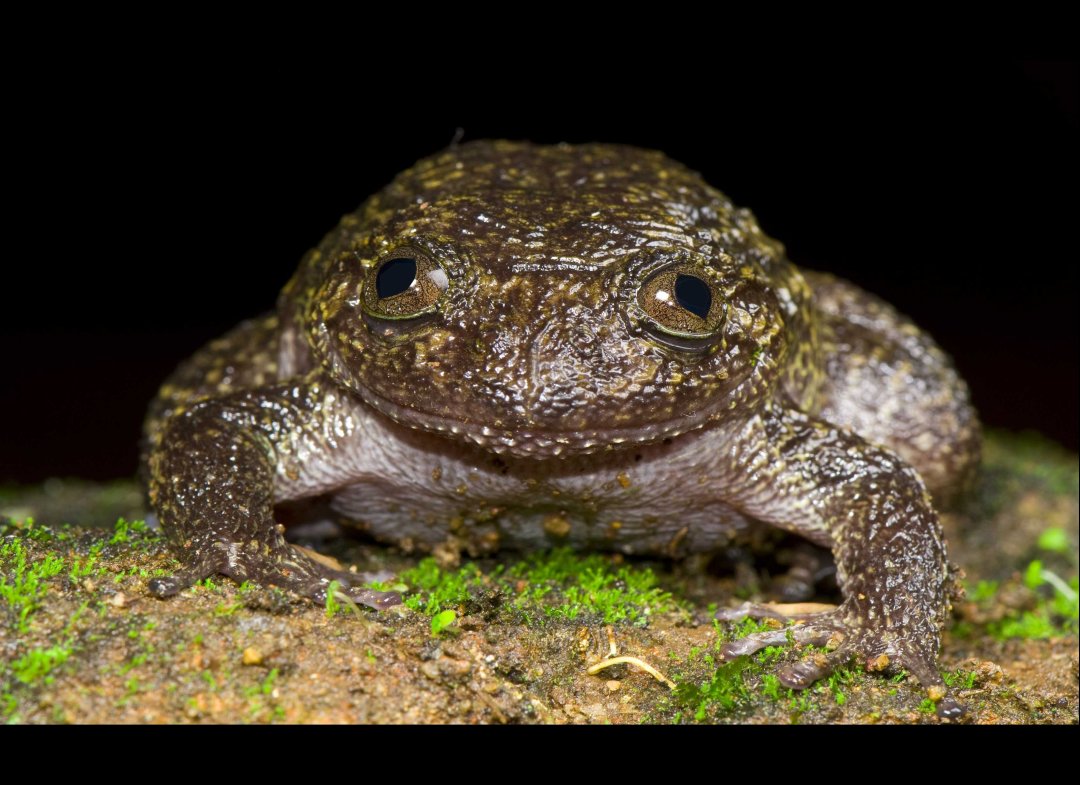
WAYANAD NIGHT FROG- Nyctibatrachus grandis
Prof. S. D. Biju
Tuesday, July 19, 2011
On trail of India's lost amphibians
MUMBAI: After scouring forests and marshlands across the nation trying to locate rarely sighted amphibians, wildlife researchers and naturalists, who are part of the Lost Amphibians of India (LAI) initiative, will share their findings today at a press conference in Navi Mumbai.
LAI is a search taking place simultaneously in 16 states for 67 amphibian species that have been 'missing' for a period ranging from 16 years to 169 years. Around 24 teams of researchers and nationalists are involved in the project.
Dr Caesar Sen Gupta, who is a member of the expedition teams from Mumbai, said, the aim of the project is to locate species that have not been spotted since their first sighting.
"Until now, five species of amphibians have been rediscovered in the eight expeditions, carried out mainly in the Western Ghats and the Northeast." LAI rediscovered rare frog species, including the Chalazodes bubble-nest frog, Anamalai dot frog, Dehradun stream frog, Silent Valley tropical frog, and the Elegant tropical frog. Each of these species was last seen decades ago, and had been classified 'missing'.
Dr S D Biju, the programme coordinator of LAI, said, "For a successful conservation programme, we first need to know what we have to save.
The fact that these species were rediscovered gives us hope that all is not lost. We have gathered more data on other lost species." With around 341 recorded species, India can be called a 'global hub of amphibians'. On the flip side, however, over 40% of Indian amphibians are facing extinction. LAI hopes to garner more support and spread awareness in the coming months. Monsoon is the best time for such expeditions, and the teams have planned 20 more field trips before the rainy season ends.
According to experts, amphibians are indicator species and act as environmental barometers, making them an important part of the ecosystem. The roles they play-from controlling the population of insects and the spread of disease to humans and crops-are an important part of the ecology.
Massive habitat loss is one of the main threats that amphibians in India face. "The aim of the project is not only to find our lost amphibians, but also to see how we can conserve and protect their habitats," Biju added.
Full Story
LAI is a search taking place simultaneously in 16 states for 67 amphibian species that have been 'missing' for a period ranging from 16 years to 169 years. Around 24 teams of researchers and nationalists are involved in the project.
Dr Caesar Sen Gupta, who is a member of the expedition teams from Mumbai, said, the aim of the project is to locate species that have not been spotted since their first sighting.
"Until now, five species of amphibians have been rediscovered in the eight expeditions, carried out mainly in the Western Ghats and the Northeast." LAI rediscovered rare frog species, including the Chalazodes bubble-nest frog, Anamalai dot frog, Dehradun stream frog, Silent Valley tropical frog, and the Elegant tropical frog. Each of these species was last seen decades ago, and had been classified 'missing'.
Dr S D Biju, the programme coordinator of LAI, said, "For a successful conservation programme, we first need to know what we have to save.
The fact that these species were rediscovered gives us hope that all is not lost. We have gathered more data on other lost species." With around 341 recorded species, India can be called a 'global hub of amphibians'. On the flip side, however, over 40% of Indian amphibians are facing extinction. LAI hopes to garner more support and spread awareness in the coming months. Monsoon is the best time for such expeditions, and the teams have planned 20 more field trips before the rainy season ends.
According to experts, amphibians are indicator species and act as environmental barometers, making them an important part of the ecosystem. The roles they play-from controlling the population of insects and the spread of disease to humans and crops-are an important part of the ecology.
Massive habitat loss is one of the main threats that amphibians in India face. "The aim of the project is not only to find our lost amphibians, but also to see how we can conserve and protect their habitats," Biju added.
Full Story
Tuesday, April 26, 2011
Canopy frog spotted in Wayanad
By P. Venugopal

The Wayanad frog can change its hue to all conceivable patterns to effect perfect camouflage with its surroundings.
THIRUVANANTHAPURAM, MARCH 24. A `blup-blup' sound resembling that of water drops falling on a stagnant pool could be heard coming from high up the trees in the Wayanad forests during the monsoon. The source of this sound had remained a mystery to researchers for decades.
Six years ago, the naturalists Anil Zachariah and P.K. Uthaman found that it was the call of a canopy frog that had made the high branches of the trees its home. Soon, the frog expert S.D. Biju was after the hitherto unknown creature, scouring these rainforests in the Western Ghats for a specimen.
Locating this strange frog was a real challenge and, ultimately, when he succeeded, it was found perching perfectly camouflaged on a branch more than 20 metres high.
Dr. Biju, who is now doing research in Brussels Free University in Belgium, and Franky Bossuyt of the same institution, recently identified that the frog belongs to an entirely new species. They have reported their find, Philautus nerostagona, in a recent issue of the Current Science.
Subscribe to:
Posts (Atom)