Showing posts with label India. Show all posts

Wednesday, April 2, 2014

India could soon help bring back an extinct, spectacular species of lions

LONDON: India could soon help bring back an extinct lion species. DNA tests by an international team of scientists has confirmed the lions in India have close genetic links with the now extinct Barbary lions.

This means that "reseeding" Indian lions could bring back the extinct species and reintroduce lions into North Africa.
India could soon help bring back an extinct, spectacular species of lions
Barbary lions of North Africa extending from Egypt to Morocco were also called the Atlas lions and had the most spectacular physical features of all lion species. (Getty Images photo)


Less than 400 Asiatic lions survive at present on the Kathiawar Peninsula of India and the species is listed as endangered by the International Union for the Conservation of Nature.

Barbary lions of North Africa — including mountainous regions — extending from Egypt to Morocco were also called the Atlas lions and had the most spectacular physical features of all lion species. The lion's extensive mane made it look majestic. It was a lot larger with differently-coloured eyes to other lions.

Dr Ross Barnett of Copenhagen University, who had started the research during his days at Durham University in UK, sequenced the DNA from the skulls of two Barbary lions once held in Britain's Tower of London. It has helped reveal the origin of modern lions.

The skulls of these lions dated as living in the 14th and 15th centuries were discovered preserved in the Tower of London's moat.

Dr Barnett said he was surprised by the incredibly close relationship between the extinct Barbary lion from North Africa and the Asian lion from India. This he says could now get conservationists start talking about resurrecting the subspecies and reintroducing lions into North Africa"

Despite the large geographical distances between them, the Indian lions seem to be closely related to Iranian lions and the Barbary lions of North Africa.

The study says: "In the tiger, another charismatic felid species, studies of ancient mitochondrial DNA have suggested a close relationship between the extinct central Asian Caspian tiger and the extant Amur tiger. This has allowed conservationists to discuss the translocation of Amur tiger stock to occupy the former range of the Caspian tiger with support from the World Tiger Summit. Similarly, if no examples of purebred Barbary lions can be found within the zoo population, there might be scope for restoration of the North African lion population using the closely related Indian lion."

A genetic analysis of living lions and museum specimens confirms modern lions' most recent common ancestor lived around 124,000 years ago.

Dr Barnett said, "Understanding the demographic history of a population is critical to conservation. This is particularly true for the lion which as a consequence of millennia of human persecution, has large gaps in its natural distribution and several recently extinct populations. We sequenced mitochondrial DNA from museum-preserved individuals including the extinct Barbary lion and Iranian lion as well as lions from West and Central Africa. We have identified deep, well-supported splits within the mitochondrial phylogeny of African lions."

The lion had one of the largest geographical distributions of any terrestrial mammal during the Late Pleistocene, ranging from southern Africa through northern Eurasia to Central America. Widespread hunting and anthropogenic changes to lion habitat are continuing to reduce lion populations across their entire range.

The research says: "From the DNA analysis, we identified four new mitochondrial haplotypes: one from North Africa, one from a suspected Barbary lion present in medieval London, one from Iran, and one from Senegal. Four of the six Barbary lions exhibited sequence identical to that of the extant Indian lion."

"International bodies currently recognize only two lion conservation units: African and Asian lions. The data clearly show that Asian lions are nested within the diversity present in Central, West and North Africa. Of particular concern are the central African and western African populations, which may be close to extinction, with estimates of 800 lions in West Africa and 900 lions in Central Africa. The close phylogenetic relationships among Barbary, Iranian, and Indian lion populations are noteworthy given their considerable geographical separation. The restoration of the extinct North African Barbary lion has attracted the attention of conservationists both inside and outside North Africa," it added.

Original News

Friday, December 6, 2013

Tarantulas Loved to Extinction?

6 December 2013 6:15 pm
Spiders may not be the most cuddly of species, but some are so prized by collectors that their existence could be in peril. The pet trade is one of the reasons that the U.S. Fish and Wildlife Service (FWS) this week took a step toward putting 11 species of tarantula on its list of endangered species. This slideshow highlights some of these colorful species and their natural history.
The spiders live in India and Sri Lanka, so the main impact of listing them would be to generally prohibit their importation or sale within the United States. Most of the species live in trees and are threatened by deforestation. Some will enter homes, where people kill them. All of them are threatened by collection for the pet trade. The reddish parachute spider (Poecilotheria rufilata), in particular, is difficult to breed in captivity, and requires wild individuals.
Brent Hendrixson, a spider biologist at Millsaps College in Jackson, says that habitat destruction is most likely the largest threat to the tarantulas. “It might be a stretch to say that overcollecting is driving the numbers down,” he says. “We don’t have any concrete data on exports from India or Sri Lanka in terms of wild-caught animals.” Most of the individuals in the United States have been propagated through captive breeding programs, he adds. The peacock tarantula (Poecilotheria metallica), in particular, is well suited because it is easy to breed and grows rapidly. They’re also stunningly beautiful.
In 2010, a group called WildEarth Guardians in Santa Fe petitioned FWS to list species of the genus Poecilotheria and on Tuesday, the agency agreed that there’s enough science to warrant further review. That is supposed to take a year, but often stretches out longer. FWS willaccept public comments until 3 February.

Søren Rafn
The peacock tarantula (Poecilotheria metallica) is known only from a small forest reserve in Andhra Pradesh, India. Like others in the genus, they make funnel webs inside deep crevices of old growth trees.


BayLee's 8 Legged Art
The beautiful parachute spider (Poecilotheria formosa) lives in the Eastern Ghats in southern India and is poorly known. Males have never been discovered.


BayLee's 8 Legged Art
The reddish parachute spider (Poecilotheria rufilata) ambushes prey and has been seen capturing young bats. They are smuggled from India into Europe and America for the pet trade.


Morkelsker
Found in the Kitulgala Forest Reserve of southern Sri Lanka, the fringed ornamental (Poecilotheria ornata) inflicts a painful bite. Like other tarantulas, its venom is not fatal to humans.


Brent Moore
The striated parachute spider (Poecilotheria striata) is popular among pet traders and collectors. It’s found across 2000 km2 of the Western Ghats in India, where its habitat continues to decline.


B. Smith
The wonderful parachute spider (Poecilotheria miranda) gets its name because males will sail down from trees to the ground. The population, in the Chhota Nagpur region of northeast India, is thought to be decreasing.


Laurence Livermore
The brown parachute spider (Poecilotheria subfusca) comes from south-central Sri Lanka. Scientists surveying their habitat from 2003 to 2005 found only 20 individuals.


Zoological Survey of India
The Rameshwaram parachute spider (Poecilotheria hanumavilasumica) was discovered in 2004 in a sacred grove on Rameshwaram Island in southern India. They ambush insects.

Friday, May 17, 2013

National Butterfly of India

Last updated: 24th May 2013
[This is work in progress and to be updated soon with more details]

A few years back, I remember discussing with few friends that why don't we have invertebrate taxa as National symbols rather than just having Tiger and Peacock. Recently same topic was raised by some members on ButterflyIndia yahoo group. Over past week or so, many ideas are being shared and discussed.

First thing I did was to take a quick look around, to see if some countries actually have "National Butterflies" designated. I was pleasantly surprised to see that our neighbors Bhutan and Srilanka have done so in recent years.

National Butterflies of Countries

Bhutan Ludlow’s Bhutan Glory (Bhutanitis ludlowi)


Sri Lanka  Sri Lanka Birdwing (Troides darsius)

Source: Wikipedia

Malaysia Rajah Brooke's Birdwing (Trogonoptera brookiana)

Source: Wikipedia

Japan Japanese emperor (Sasakia charonda)

Source: Wikipedia


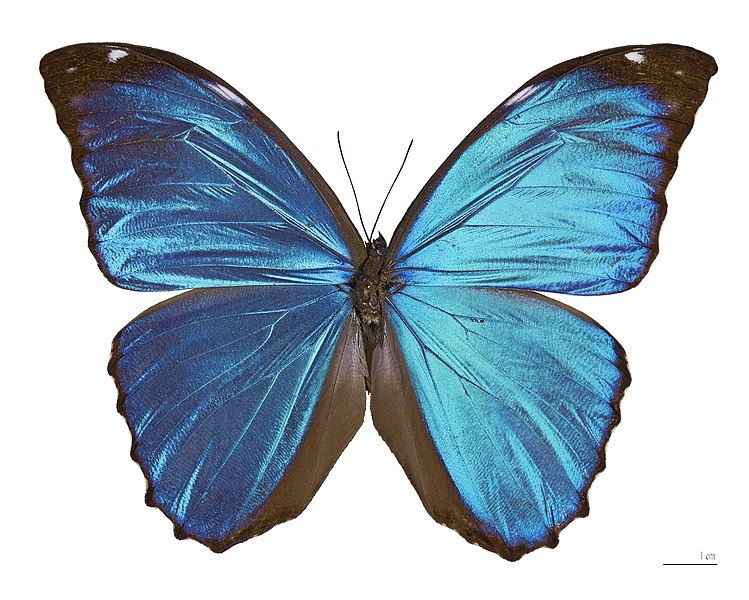
Costa Rica Blue Morpho (Morpho menelaus) *
Source: Wikipedia

* Source of information doubtful

[If you know of any more, please share the information in comments section and I would update it here.]

As for India, most people seem to agree that we do need a designated National Butterfly. Now the question is what should it be? Very quickly members have started sharing the view and ideas, including candidate species.

Mr Anuj Jain shared his experience with similar process currently in Singapore. 

Mr. Maan Barua has been working on flagship species and has worked on particularly flagships for invertebrate conservation (Barua et. al. 2012) using butterflies. 

Criteria

  • Beautiful / Colorful
  • Common throughout
  • Endemic
  • easy to recognize
  • Conservation status / conservation action

Proposed Species (so far)

  • Kaiser-i-hind (Teinopalpus imperialis) 
  • Common Mormon (Papilio polytes)
  • Common Rose (Pachliopta aristolochiae)
  • Crimson Rose butterfly (Pachliopta hector)
  • Peacock Royal (Tajuria cippus)
  • Common Jezebel (Delias eucharis)
  • Paris Peacock (Papilio paris)
  • Krishna Peacock (Papilio krishna)
  • Malabar Banded Peacock (Papilio buddha)
  • Blue Nawab (Charaxes schreiber)
  • Southern Birdwing (Troides minos)
  • Blue Pansy (Junonia orithya)
  • Five-bar Swordtail (Graphium antiphates)
  • Blue Mormon (Papilio polymnestor)
  • Yellow Gorgon (Meandrusa payeni)
  • Common Birdwing (Troides helena)
If you have more suggestions on species, criteria for selection or any other suggestions, please leave comment on the blog.

References:
  • Barua, M., Gurdak, D. J., Ahmed, R. A., & Tamuly, J. (2012). Selecting flagships for invertebrate conservation. Biodiversity and Conservation. doi:10.1007/s10531-012-0257-7

Sunday, September 18, 2011

12 New Frog Species Discovered In India


By KATY DAIGLE, Associated Press


NEW DELHI (AP) -- Years of combing tropical mountain forests, shining flashlights under rocks and listening for croaks in the night have paid off for a team of Indian scientists which has discovered 12 new frog species plus three others thought to have been extinct.

It's a discovery the team hopes will bring attention to India's amphibians and their role in gauging the health of the environment.

Worldwide, 32 percent of the world's known amphibian species are threatened with extinction, largely because of habitat loss or pollution, according to the group Global Wildlife Conservation.

"Frogs are extremely important indicators not just of climate change, but also pollutants in the environment," said the project's lead scientist, biologist Sathyabhama Das Biju of the University of Delhi.

Many of the newly found frogs in India are rare and are living in just a single area, so they will need rigorous habitat protection, Biju told The Associated Press on Saturday. "Unfortunately in India, conservation has basically focused on the two most charismatic animals – the elephant and the tiger. For amphibians there is little interest, little funding, and frog research is not easy."


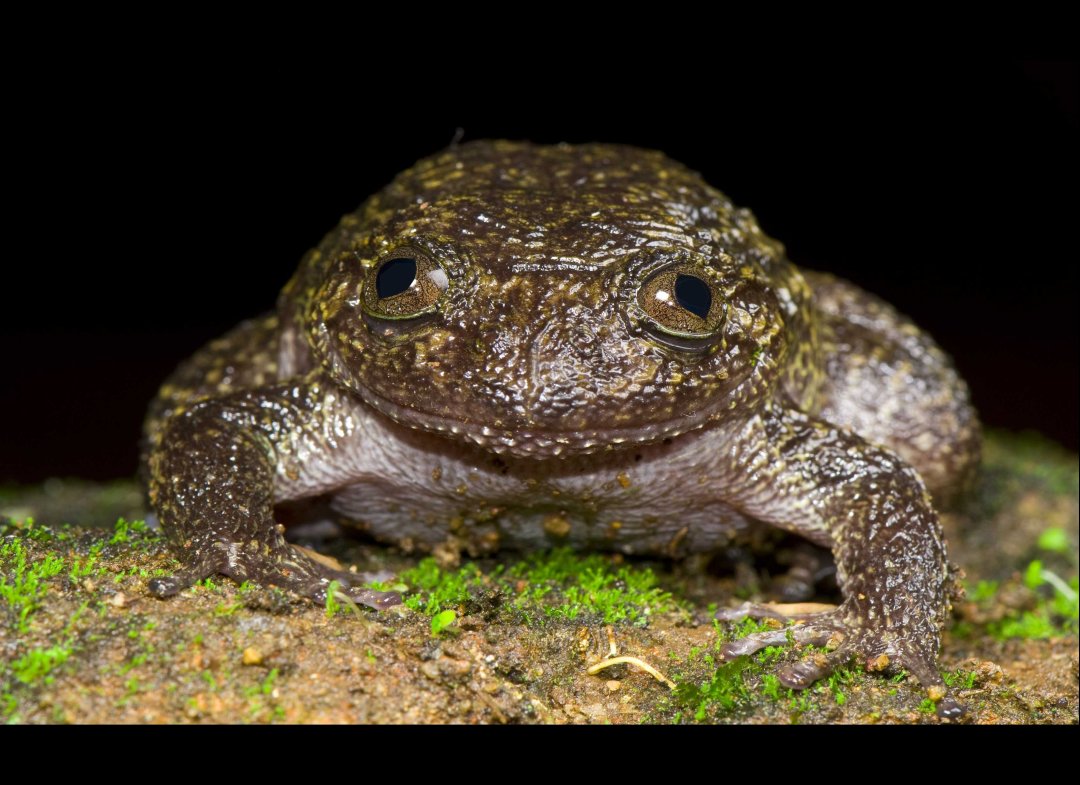
WAYANAD NIGHT FROG- Nyctibatrachus grandis Prof. S. D. Biju 


Monday, August 8, 2011

जुहू किनारी तेलगळती सुरू

मुंबईजवळच्या समुद्रा अडकलेल्या बोटींमधून तेलगळती सुरू झाल्याचे सांगितले जात असून, जुहू किना-यावर तेलाचे तवंग दिसू लागले आहेत. त्यामुळे सावधानतेचा इशारा म्हणून रविवारी पर्यटकांनी गजबजणा-या जुहू किना-यावर जाऊ नका, अशी सूचना प्रशासनाकडून देण्यात येत आहे.

गुरुवारी ४ ऑगस्ट रोजी मुंबईपासून २२ सागरी मैल अंतरावर बुडालेल्या ' एमव्ही रॅक ' या जहाजातून तेलगळती सुरू होण्याची भिती आधीपासूनच वर्तवली जात होती. आता जुहूच्या किना-यावर तेलाचे तवंग दिसू लागल्याने प्रशासन सतर्क झाले आहे. तटरक्षक दलाने ' ऑपरेशन पर्यावरण सुरक्षा ' सुरू केले असून, ' समुद्रप्रहरी ' या बोटीच्या मदतीने तेलगळतीचा धोका कमी करण्याचे सर्वतोपरी प्रयत्न करण्यात येत आहेत.

आज सकाळपासूनच जुहूच्या किना-यावर हे तवंग दिसू लागले. परंतु हे तवंग ' एमव्ही रॅक ' मधून गळणा-या तेलाचे आहेत, की जुहू किना-यावर अडकलेल्या ' पवित ' या जहाजातून गळणा-या तेलाचे आहेत याबद्दल निश्चित माहिती मिळत नाही. परंतु या तेलगळतीमुळे सागरी पर्यावरणाला धोका पोहचण्याची शक्यता निर्माण झाली आहे.

दरम्यान, तटरक्षक दलाच्या मदतीसाठी महापालिका, अग्निशमन दल आणि मुंबई पोलीस जुहू किना-यावर सज्ज आहेत. या तेलगळतीचे दुष्परिणाम टाळण्यासाठी मुंबईकरांनी आणि पर्यटकांनी आज जुहू किना - यावर येणे टाळावे अशा सूचना केल्या आहेत.

या जहाजांच्या टाक्यांमध्ये साधारणतः २९० टन इंधन आणि ५० टन डिझेल असते. त्यामळे ते बाहेर आल्यास मोठ्या प्रमाणात सागरी प्रदूषण ओढवू शकते, हे ध्यानात घेऊन सतर्कता बाळगावी लागणार आहे.

बुडालेल्या ' एमव्ही रॅक ' या जहाजातील ६० हजार टन कोळसा हा बंद कप्प्यांमध्ये असला, तरी तो बाहेर आल्यास सागरी पर्यावरणाला नेमकी कशी हानी पोहोचेल, हे सांगता येत नाही. कोळशाच्या परिणामांवर फारसा शास्त्रीय अभ्यास झालेला नाही. मात्र तेलतवंग पसरल्यास किनारपट्टीलगतच्या खारफुटीला व तेथे नव्याने रुजणाऱ्या खारफुटीचा गळा घोटला जातो, हे चित्रा-खलिजिया टकरीच्या वेळीही स्पष्ट झाले, याकडे बॉम्बे नॅचरल हिस्ट्री सोसायटीच्या अभ्यासक स्वप्ना प्रभू यांनी लक्ष वेधले.

मुंबईलगत आढळणारी अविसिया मरिना ही खारफुटीची प्रजाती तुलनेने नव्या वातावरणाशी जुळवून घेणारी आहे, असे त्यांनी सांगितले. गेल्यावषीर्प्रमाणेच याही वर्षी खारफुटीचा बीजारोपणाचा काळ असतानाच ही दुर्घटना घडल्याने सतर्कता मात्र ठेवावीच लागेल. शुक्रवारी दुपारी वसोर्व्यात पवित जहाजातूनही तेल बाहेर येत असल्याची चर्चा होती. मात्र ते सामग्रीभोवतीचेच तेल असावे, ही गळती नाही, असे संरक्षणदलाच्या प्रवक्त्यांनी स्पष्ट केले.    


Full Story

Tuesday, July 12, 2011

Gharials return to banks of the Chambal

Sharp-toothed crocodilians a welcome sight for local residents, especially since they only eat fish.

Gharial letter india
An Asian gharial at a crocodile farm in Pierrelatte, France. Conservation efforts on the Chambal river, in India, seem to be paying off. Photograph: AFP/Getty
We realised how lucky we were to see one of the remaining gharials in the Chambal river in Uttar Pradesh in northern India: they are now only found here and in Nepal, there being just 200 adult breeding pairs left in the wild. I could just see the characteristic tremendous bulbous knob on the end of the male gharial's long fine snout, as he glided past in the fast river.
My friend David has a real empathy for these reptiles.
"Do you know that they get gout too!" he says, amazed, as he nurses his sore foot and winces in pain, while we read a report about the mysterious deaths – seemingly from gout – of many of these reptiles. We wonder if the sick gharials also suffered from incredibly sore joints like humans experience from the disease, a form of arthritis.
Over four years ago, more than 20 gharials were found dead on the Chambal. They seemed to have been poisoned – dying from kidney failure and gout from eating contaminated fish from polluted rivers. "What a horrible death! Poor gharials," sympathises David, as we imagine the sick reptiles suffering.
But a few weeks later we hear some welcome news. The new breeding centre further up river, in the Sheopur district, is proving a success. More than 1,000 baby gharials from more than 40 mothers have hatched in the last month. On the drive back on the bus we talk to a few locals who are very excited about the gharial babies. One young boy tells me thousands have been born; a young woman tells me that there are tens of thousands.

Full Story

Tuesday, May 24, 2011

Countries adopt pledge to protect elephants


NEW DELHI (AP) — Representatives of eight countries with large wild elephant populations pledged Tuesday to eradicate poaching of the animals and smuggling of ivory to ensure their survival for future generations.
The environment ministers and officials from Asia and Africa also urged all 50 nations with significant numbers of elephants to meet in two years to adopt a shared vision for promoting their conservation and welfare.
Delegates at Tuesday's "Elephant 8 Ministerial Meet" underscored threats to elephant habitats from mining, deforestation and land development.
Although the threat to elephants is not as dramatic as that facing tigers, the steady decline of their population is worrying, Indian Environment Minister Jairam Ramesh said.
"Unlike the tiger, which faces a crisis of extinction, the elephant in India faces a crisis of attrition," he said.
In less than a century, the number of Asian elephants has fallen by 50 percent.
According to the Switzerland-based International Union for Conservation of Nature, 38,500 to 52,500 wild elephants survive in Asia and another 15,000 in captivity.
The larger African elephant, although more numerous, is also listed as an endangered species, subject to threats from poachers, mining and deforestation. There are around 470,000 to 690,000 African elephants.
Environment ministers or officials from Thailand, Sri Lanka, Indonesia, India, Botswana, Congo, Kenya and Tanzania attended the meeting in New Delhi.


Monday, April 12, 2010

Poor missing out on moringa seeds' water-purifying powers

Carol Campbell

24 March 2010 | EN

Moringa_oleifera_seeds_EcoPort_Picture_Databank_21874.jpg

Moringa oleifera seeds can purify water

EcoPort Picture Databank

[OUDTSHOORN] Seeds from a tree that grows widely across the developing world could play a key role in water purification — but there is lack of awareness about this application despite a long indigenous history, say researchers.

The Moringa tree — Moringa oleifera — is native to North India but is also found in Indonesia, Latin America, and Sub-Saharan Africa, and is used in many communities mostly for food and folk medicine.

But adding crushed Moringa seeds to water can cut the time taken for bacteria and solids to settle from a full day to just one hour, and has potential for preventing diarrhoea, according to Michael Lea of Clearinghouse, a Canadian organisation that investigates low-cost water purification technologies.

Lea has published a step-by-step procedure online that shows how the seeds can be crushed to produce a natural flocculant — a substance that aggregates suspended particles.

He hopes that making the technique freely available in this way will facilitate dissemination to those who need it the most — the role of the seeds in purification has been known for centuries but use has been limited.

Writing in Current Protocols in Microbiology, he said that the seeds can provide a low-cost, accessible purification method for poor communities where diarrhoea caused by water-borne bacteria is the biggest killer of children aged five and under.

Lea noted that the seeds "should not be regarded as a panacea for reducing the high incidence of waterborne diseases" — an additional disinfection process is recommended — but can make a valuable contribution to disease reduction.

"Parts of the world have mobile phone and Internet services but no food and potable water," Lea told SciDev.Net. "These trees are indigenous so the solution is in people's backyards. What is required now is knowledge dissemination.

"M. oleifera is the only indigenous treatment technology that addresses poverty and nutrition while also providing potable water."

Lea said that superstition has sometimes limited its use. For instance, in one area of Africa, more than three Moringa trees in a backyard is seen as a source of misfortune that brings poverty and death.

Vallantino Emongor, a M. oleifera expert at the University of Botswana, said: "What is exciting is that this tree is drought resistant and is accessible throughout Africa and India. Communities need to learn what the seeds can do."

Some countries, including Burkina Faso, Benin, Ghana, Ethiopia, Kenya and Uganda, have formed associations to facilitate this.

The Clearinghouse research was published last month (18 February).

Link to full paper in Current Protocols in Microbiology


Story

Tuesday, April 6, 2010

Ayurveda out of balance: 93 percent of medicinal plants threatened with extinction


Traditional Ayurvedic medicine could face an uncertain future as 93 percent of the wild plants used in the practice are threatened with extinction due to overexploitation, theTimes of India reports.
The Botanical Survey of India recently prioritized 359 wild medicinal plant species and conducted an assessment throughout the country to determine their health. The news wasn't good. Of the 359 species, 335 were categorized as critically endangered, endangered, vulnerable or near-threatened.

Dhanvantari, the Hindu god of Ayurveda

The survey used criteria and categories established by the International Union for Conservation of Nature (IUCN) for its Red List of Threatened Species.
According to India's Ministry of Environment and Forests, 95 percent of plants used in Ayurvedic medicine are collected from the wild, and about two-thirds of that harvest uses "destructive means" that can damage or kill the plants.
To help keep these plant species from going extinct, the Indian government in 2008 initiated a program (pdf) to relocate species from the wild, study how to domesticate them, and promote sustainable harvest protocols. This survey is the latest step in that program.
Aside from its historical and cultural significance, Ayurvedic medicines could bring profits to India's coffers. The Department of Ayurveda, Yoga & Naturopathy, Unani, Siddha and Homoeopathy (AYUSH) is currently exploring export opportunities for Ayurvedic medicine through Indian Medicines Pharmaceutical Corporation Limited, a company owned by the Indian government. Already, Ayurvedic treatments, vacations and consultants are popular among some alternative health consumers in the U.S.
Of course, other traditional Asian medicines have been attacked for their use of parts from endangered animals, such as tiger bones and rhino horns, but Ayurveda has so far avoided such criticisms.

Image: Dhanvantari, the Hindu god of Ayurveda, via Wikipedia

Sunday, April 4, 2010

93% of wild medicinal plants in endangered list: Study

NEW DELHI: Ninety three per cent of wild medicinal plants used for making ayurvedic medicines in the country are endangered and the government is trying to relocate them from their usual habitat to protect them.

The threat to the plants came to the fore in an assessment exercise in different states carried out by the Botanical Survey of India.

The assessments were done for a total of 359 prioritized wild medicinal plant species. Out of this, 335 have been assigned Red List status ranging from critically endangered, endangered, vulnerable to near-threatened.

In addition, a total of 15 such species recorded in trade have been found threatened, officials in the health ministry's Ayush department said.

Some of the rare plants reported to be threatened, have been relocated during the last decade, including Utleria Salicifolia and Hydnocarpus Pentandra in Western Ghats, Gymnocladus Assamicus and Begonia Tessaricarpa from Arunachal Pradesh and Agapetes Smithiana in Sikkim.

The assessments have involved conducting Conservation Assessment and Management Prioritisation using International Union for Conservation of Nature and Natural Resources (IUCN) Red List Categories.

The officials said the medicinal plant resources in the country are threatened by over exploitation to meet the demand of herbal industries.

As per the information received from the Ministry of Environment and Forests, about 95 per cent of such plants are harvested from the wild, primarily from forests.

The National Medicinal Plants Board constituted in November 2000, has been implementing a Central sector scheme for development and cultivation of medicinal plants since 2000-01.

This scheme was revised and renamed as "Central Sector Scheme for Conservation, Development and Sustainable Management of Medicinal Plants" during 2008-09.

States forest departments have been given assistance for protection and propagation of such endangered species, especially used by the herbal industries.

Projects for setting up of 29 Medicinal Plants Conservation Areas (MPCAs) have also been implemented in the states covering mainly the medicinal plants viz Asoka, Guggal and Dashmool varieties.

The scheme is being implemented with an outlay of Rs 321.30 crore during the 11th Plan.

In addition, a new "Centrally Sponsored Scheme of National Mission on Medicinal Plants" with a total outlay of Rs 630 crore is being implemented since 2008-09 by National Medicinal Plants Board. A total of 24 states have been covered under the scheme.

Thursday, March 25, 2010

Pictures: 7 Cat Species Found in 1 Forest—A Record


Leopard Spotted

Photograph courtesy Kashmira Kakati
Caught by a camera trap, a leopard prowls under the dense canopy of the Jeypore-Dehing lowland rain forest in the northeast Indian state of Assam (map).

Released in February, the picture was taken during a two-year survey supported by the Critical Ecosystem Partnership Fund, the Ashoka Trust for Research in Ecology and the Environment, the Rufford Small Grants Foundation, and the Wildlife Conservation Society.

The research found seven cat species in a 354-square-mile (570-square-kilometer) range—the highest diversity of cat species yet photographed in a single area.

Wildlife biologist Kashmira Kakati had been studying the gibbons of Jeypore-Dehing and became curious about the predator tracks she kept finding on the ground.
"I said, I need to find out what's there," Kakati told National Geographic News. "Nobody had any clue. People who had been in the forest 30 years didn't know."

With 30 digital camera traps, Kakati captured not only the cats but a number of other rare forest animals between 2007 and 2009. "Even I was surprised by the result," she said. (See related pictures of a rare Chinese wildcat snapped by a camera trap.)

(Related: National Geographic's Big Cats Initiative.)


Cloudy Coat

Photograph courtesy Kashmira Kakati
The camera-trap pictures include this night shot of a rare clouded leopard, so named for the nimbus-like pattern of its coat.

The clouded leopard is listed as vulnerable by the International Union for Conservation of Nature, which means the species faces a high risk of extinction. The cat's population is on the decline, mostly due to loss of habitat from deforestation. (See a picture of rare clouded leopard cubs born at a Virginia zoo.)

In Jeypore-Dehing, the cat is so seldom seen that local villagers don't even have a name for it, Kakati said.


Little Leopard

Photograph courtesy Kashmira Kakati
Seen in another Jeypore-Dehing camera-trap picture, the leopard cat is a diminutive and distant relative of the better-known spotted predator from which it takes its name.
The species is commonly recorded across its range in Asia, according to the International Union for Conservation of Nature. Leopard cats are considered to have generally stable populations, except for a few subspecies that are close to extinction.

Golden Moment

Photograph courtesy Kashmira Kakati
The Jeypore-Dehing rain forest also houses the Asiatic golden cat, which is listed as near threatened—but on the verge of becoming vulnerable—by the International Union for Conservation of Nature.

In addition to the seven cat species, Kakati's camera traps recorded 12 other carnivore species in the Jeypore-Dehing range, including a dhole, or Asiatic wild dog; the Malayan sun bear; and several species of the catlike mammal the civet.


Jungle Cat

Photograph courtesy Kashmira Kakati
The Jeypore-Dehing range is hemmed in by oil, coal, and logging operations that threaten wildlife, Kakati said. Just 69 square miles (111 square kilometers) of the forest, an area known as the Dehing-Patkai Wildlife Sanctuary, is off-limits to development.

In addition, some animals—including the jungle cat pictured above—appear to be migrating to Jeypore-Dehing from adjoining forests to escape severe poaching, Kakati said.

"The range has become a refuge," she said. "Somehow the animals have managed to hold on."


Rear March

Photograph courtesy Kashmira Kakati
The camera traps recorded about 45 species of mammals—including primates, deer, porcupines, wild pigs, and rodents—that likely serve as prey for the rain forest's carnivores, such as the female tiger pictured above. (Related: "India's Tigers Number Half as Many as Thought.")

Although many cat species are at risk due to poaching for their bones and pelts, people in Jeypore-Dehing don't hunt the cats themselves, Kakati said. But locals do poach the wild deer and pigs, cutting in on carnivores' food sources.


Spotty Protection

Photograph courtesy Kashmira Kakati
The researchers hope the discovery of so many rare cat species in Jeypore-Dehing, including this threatened marbled cat, will encourage the Indian government to protect a wider portion of the Eastern Himalaya region from development and poaching.

"The entire forest here should be protected as a single conservation landscape, free of disturbance and connected by wildlife corridors between the disjunct sections," Ravi Chellam, of the Wildlife Conservation Society's India Program, said in a statement.


—Dan Morrison
Story

National Geographic Daily News

Monday, February 8, 2010

Extinct: Andaman tribe’s extermination complete as last member dies

The last member of a unique tribe has died on India’s Andaman Islands.
Boa Sr was the last member of the Bo tribe. Boa Sr was the last member of the Bo tribe.
© Alok Das
Boa Sr, who died last week aged around 85, was the last speaker of ‘Bo’, one of the ten Great Andamanese languages. The Bo are thought to have lived in the Andaman Islands for as much as 65,000 years, making them the descendants of one of the oldest human cultures on Earth.
Boa Sr was the oldest of the Great Andamanese, who now number just 52. Originally ten distinct tribes, the Great Andamanese were 5,000 strong when the British colonized the Andaman Islands in 1858. Most were killed or died of diseases brought by the colonizers.
Having failed to ‘pacify’ the tribes through violence, the British tried to ‘civilize’ them by capturing many and keeping them in an ‘Andaman Home’. Of the 150 children born in the home, none lived beyond the age of two.
The surviving Great Andamanese depend largely on the Indian government for food and shelter, and abuse of alcohol is rife.
Boa Sr survived the Asian tsunami of December 2004, and told linguists, ‘We were all there when the earthquake came. The eldest told us ‘the Earth would part, don’t run away or move’. The elders told us, that’s how we know.’
Linguist Prof. Anvita Abbi, who knew Boa Sr for many years, said, ‘Since she was the only speaker of [Bo] she was very lonely as she had no one to converse with… Boa Sr. had a very good sense of humour and her smile and full throated laughter were infectious.’
‘You cannot imagine the pain and anguish that I spend each day in being a mute witness to the loss of a remarkable culture and unique language.’
Boa Sr told Abbi she felt the neighbouring Jarawa tribe, who have not been decimated, were lucky to live in their forest away from the settlers who now occupy much of the Islands.
Survival’s director Stephen Corry said today, ‘The Great Andamanese were first massacred, then all but wiped out by paternalistic policies which left them ravaged by epidemics of disease, and robbed of their land and independence.
‘With the death of Boa Sr and the extinction of the Bo language, a unique part of human society is now just a memory. Boa’s loss is a bleak reminder that we must not allow this to happen to the other tribes of the Andaman Islands.’
Listen to Boa Sr singing in Bo:

Last of the Bo tribe dies
Boa Sr, the last member of the Bo tribe, sings.
Story

Friday, October 30, 2009

Endangered species list released

KOCHI: The Ministry of Environment and Forests has issued a notification under the Biological Diversity Act (2002) and released a revised list of endangered species in Uttarakhand, Uttar Pradesh, Himachal Pradesh and Kerala.

The National Biodiversity Authority has issued alerts to protect 13 animal species and 26 plant species threatened with extinction in Kerala, the state with the most number of threatened species in the list.

Uttarakhand comes next, with 16 plant species and 15 animal species, while Himachal Pradesh has eight plant species and Uttar Pradesh has just one plant species threatened with extinction.

As per the conditions, no plant or animal species shall be collected live or dead by any person, except for scientific research, by herbariums and museums of scientific and academic institutions and for scientific investigation only. This can be done only with a State Biodiversity Board approval.

The notification, issued by MoEF joint secretary A K Goyal, has asked the State Biodiversity Board to conduct awareness programmes and provide educational material on notified species to Forest Department personnel, biodiversity management committees, ecotourism programmes, forest dwellers and tribals.

The 13 threatened species in Kerala include Fruit bats, the Malabar Large- Spotted Civet, Blue Whales, Sea Cows, Tigers, the Indian Vulture, Leatherback Sea Turtles, Hawkbill Sea Turtles, Hawkbill Sea Turtles, Murthi’s Frog, the Toad-skinned Frog, Green Saw Fishes and the Philautus Chalaziodes.

The 26 plant species named include Syzygium Palghatense, Syzygium Periyarensis (Wild Jamuns), Vanda Thwaitesii (Nyarapazham) and Janakia aryapathra (Aryalpathram).


Story

Wednesday, July 15, 2009

Longest insect migration revealed

Matt Walker
Editor, Earth News

Globe skimmers (Pantala flavescens)
Globe skimmers rest up

Every year, millions of dragonflies fly thousands of kilometres across the sea from southern India to Africa.

So says a biologist in the Maldives, who claims to have discovered the longest migration of any insect.

If confirmed, the mass exodus would be the first known insect migration across open ocean water.

It would also dwarf the famous trip taken each year by Monarch butterflies, which fly just half the distance across the Americas.

Biologist Charles Anderson has published details of the mass migration in the Journal of Tropical Ecology.

Each year, millions of dragonflies arrive on the Maldive Islands, an event which is well known to people living there.

"But no-one I have spoken to knew where they came from," says Anderson, an independent biologist who usually works with organisations such as the Maldivian Marine Research Centre to survey marine life around the islands.

This just illustrates how little we still know about the natural world
Biologist Charles Anderson

Their appearance is especially peculiar because the 1200 islands that make up the Maldives lie 500 to 1000km from the mainland of southern India, and all are coral cays with almost no surface freshwater, which dragonflies need to complete their lifecycle.

Anderson noticed the dragonflies after he first arrived in the Maldives in 1983. He started keeping detailed records each year from 1996 and now collates data collected by local observers at other localities in the Maldives, in India and on vessels at sea.

When Anderson compared these observations with those made of dragonflies appearing in southern India, he found a clear progression of arrival dates from north to south, with dragonflies arriving first in southern India, then in the Republic of Maldives' capital Male, and then on more southern atolls.

Each year, dragonflies first appear in Male between 4 and 23 October, with a mean arrival date of 21 October. Dragonfly numbers peak in November and December, before the insects then disappear once more. The insects arrive in waves, with each staying for no more than a few days.

Over 98% of the dragonflies recorded on the islands are Globe skimmers (Pantala flavescens), but Pale-spotted emperors (Anax guttatus), Vagrant emperors (A. ephippiger), Twisters (Tholymis tillarga) and Blue perchers (Diplacodes trivialis) also appear in some numbers.

The dragonflies then reappear between April and June.

Longest journey

The dragonflies are clearly migrating from India across the open sea to the Maldives, says Anderson.

"That by itself is fairly amazing, as it involves a journey of 600 to 800km across the ocean," he says.

Quite how they do it was a bit of a mystery, as in October at least they appear to be flying against the prevailing winds.

However, in October, and continuing into November and December, a weather system called the Inter-tropical Convergence Zone moves southwards over the Maldives.

Ahead of the ITCZ the wind blows towards India, but above and behind it the winds blow from India. So it seems that the dragonflies are able to reach Maldives by flying on these winds at altitude above 1000m.

HARDCORE FLYING
Globe skimmers are renowned for their ability to fly long-distances
They can fly up to 6300m high, the highest of any dragonfly species
With a tailwind of 10m per second, a dragonfly could cross from India to Male in 24 hours
Maldivians consider the dragonflies' arrival to be a harbinger of the north-east monsoon

But that is not the end of the animals' epic adventure.

"As there is no freshwater in Maldives for dragonflies, what are they doing here?" asks Anderson.

"I have also deduced that they are flying all the way across the western Indian Ocean to East Africa."

Anderson has gathered a wealth of circumstantial evidence to back his claim.

Large numbers of dragonflies also start appearing in the northern Seychelles, some 2700km from India, in November, and then in Aldabra in the Seychelles, 3800km from India, in December.

That matches the slow southerly movement of the Inter-tropical Convergence Zone weather system, behind which winds blow steadily from India to East Africa.

It is also known that Globe skimmers appear in large numbers through eastern and southern Africa.

In Uganda, they appear twice each year in March or April and again in September, while further south in Tanzania and Mozambique they appear in December and January.

Record breakers

That strongly suggest that the dragonflies take advantage of the moving weather systems and monsoon rains to complete an epic migration from southern India to east and southern Africa, and then likely back again, a round trip of 14,000 to 18,000km.

"The species involved breeds in temporary rainwater pools. So it is following the rains, taking sequential advantage of the monsoon rains of India, the short rains of East Africa, the summer rains of southern Africa, the long rains of East Africa, and then back to India for the next monsoon," says Anderson.

"It may seem remarkable that such a massive migration has gone unnoticed until now. But this just illustrates how little we still know about the natural world."

The monarch butterfly is often cited as having the longest migration of any insect, covering around 7000km in an annual round trip from Mexico to southern Canada.

On average, it takes four generations of butterflies to complete the journey.

Anderson believes that the dragonflies survive the ocean flights by gliding on the winds, feeding on other small insects.

They too, take four generations to make the full round trip each year.

He says the migratory paths of a number of insect-eating bird species, including cuckoos, nightjars, falcons and bee-eaters, follow that of the dragonfly migration, from southern India to their wintering grounds in Africa. That suggests the birds feed on the dragonflies as they travel.

"They [fly] at the same time and altitudes as the dragonflies. And what has not been realised before is that all are medium-sized birds that eat insects, insects the size of dragonflies," he says.

Extraordinary ability

"There are earlier records of swarms of Globe skimmers flying out to sea, and at sea," Anderson continues.

"But it was always assumed that those dragonflies were doomed. Which says rather more about our earth-bound lack of imagination than it does about the globe skimmers' extraordinary flying abilities."

Story