Showing posts with label USA. Show all posts

Friday, December 6, 2013

Tarantulas Loved to Extinction?

6 December 2013 6:15 pm
Spiders may not be the most cuddly of species, but some are so prized by collectors that their existence could be in peril. The pet trade is one of the reasons that the U.S. Fish and Wildlife Service (FWS) this week took a step toward putting 11 species of tarantula on its list of endangered species. This slideshow highlights some of these colorful species and their natural history.
The spiders live in India and Sri Lanka, so the main impact of listing them would be to generally prohibit their importation or sale within the United States. Most of the species live in trees and are threatened by deforestation. Some will enter homes, where people kill them. All of them are threatened by collection for the pet trade. The reddish parachute spider (Poecilotheria rufilata), in particular, is difficult to breed in captivity, and requires wild individuals.
Brent Hendrixson, a spider biologist at Millsaps College in Jackson, says that habitat destruction is most likely the largest threat to the tarantulas. “It might be a stretch to say that overcollecting is driving the numbers down,” he says. “We don’t have any concrete data on exports from India or Sri Lanka in terms of wild-caught animals.” Most of the individuals in the United States have been propagated through captive breeding programs, he adds. The peacock tarantula (Poecilotheria metallica), in particular, is well suited because it is easy to breed and grows rapidly. They’re also stunningly beautiful.
In 2010, a group called WildEarth Guardians in Santa Fe petitioned FWS to list species of the genus Poecilotheria and on Tuesday, the agency agreed that there’s enough science to warrant further review. That is supposed to take a year, but often stretches out longer. FWS willaccept public comments until 3 February.

Søren Rafn
The peacock tarantula (Poecilotheria metallica) is known only from a small forest reserve in Andhra Pradesh, India. Like others in the genus, they make funnel webs inside deep crevices of old growth trees.


BayLee's 8 Legged Art
The beautiful parachute spider (Poecilotheria formosa) lives in the Eastern Ghats in southern India and is poorly known. Males have never been discovered.


BayLee's 8 Legged Art
The reddish parachute spider (Poecilotheria rufilata) ambushes prey and has been seen capturing young bats. They are smuggled from India into Europe and America for the pet trade.


Morkelsker
Found in the Kitulgala Forest Reserve of southern Sri Lanka, the fringed ornamental (Poecilotheria ornata) inflicts a painful bite. Like other tarantulas, its venom is not fatal to humans.


Brent Moore
The striated parachute spider (Poecilotheria striata) is popular among pet traders and collectors. It’s found across 2000 km2 of the Western Ghats in India, where its habitat continues to decline.


B. Smith
The wonderful parachute spider (Poecilotheria miranda) gets its name because males will sail down from trees to the ground. The population, in the Chhota Nagpur region of northeast India, is thought to be decreasing.


Laurence Livermore
The brown parachute spider (Poecilotheria subfusca) comes from south-central Sri Lanka. Scientists surveying their habitat from 2003 to 2005 found only 20 individuals.


Zoological Survey of India
The Rameshwaram parachute spider (Poecilotheria hanumavilasumica) was discovered in 2004 in a sacred grove on Rameshwaram Island in southern India. They ambush insects.

Wednesday, October 23, 2013

Log a Frog, Share a Snake

Citizen scientists play a role in conservation by reporting wildlife sightings.

By Cullen Hanks and Natalie Reina
From a young age, University of Texas student Emily Powell has been fascinated with wildlife. As a child, she was constantly on the hunt for insects, lizards and frogs in her backyard, sparking a passionate interest in reptiles.

“I was always interested in finding wild animals, but I think I was also motivated when I was younger because I wanted to keep reptiles as pets, and my parents would not let me for years,” Powell, a biology major, says. “I contented myself with observing them in the wild.”
A field herpetology course taught by University of Texas professor Travis LaDuc introduced Powell to the Herps of Texas (HOT) Project on iNaturalist. The project is an effort to map the distribution of reptiles and amphibians through crowdsourced observations. The iNaturalist platform allows people to share their photos of plants and animals, and in the process, it gives them the opportunity to learn about what they are seeing and contribute to conservation efforts.

Snake

Texas indigo snake.


“During the semester, we logged over 300 observations of 87 species,” Powell says. “I have only been using it for five months now, but I have found it to be a very useful program.”

iNaturalist is the perfect tool for anyone who wants to know more about wildlife. The website allows users to post observations as well as explore other observations. In addition, the iNaturalist mobile app allows people to report sightings when they are far from a computer or even a cellphone tower.
When people post an observation on iNaturalist, the program asks them for four pieces of information: who, what, when and where. These basic ingredients of an observation aid identification and allow biologists to create large, meaningful sets of data that can support conservation efforts.
“Who” is the observer, the person posting the observation.

“What” is the species identification. Fortunately, the platform is set up for naturalists of all skill levels, so observers don’t need to know what species it is.

“If you are unsure of what species you saw, you can upload the photo, ID it as ‘frog’ or ‘bird,’ and mark it for an expert to help you,” Powell says. Once the photo appears on iNaturalist, the comments section becomes a forum where others will chime in to identify the animal. When identified, the species observation is automatically linked to the profile page where you can learn more about it.
“When” is the date. Recording the date of observation is important with reptiles and amphibians, since they’re active only during certain seasons. The iNaturalist app can extract time, date and location information from data associated with smartphone pictures.

“If I am pressed for time, I’ll just snap a picture of the animal, record the location and save it to add later,” Powell says.

“Where” is especially valuable, as it helps biologists better understand what habitats support wild populations. The location is also essential for creating automated checklists for counties, parks and states on iNaturalist, a valuable resource for the amateur naturalist. The iNaturalist app automatically assigns the location using the phone’s GPS, or observers can mark the location using a Google map on the iNaturalist website.

iNaturalist

State herpetologist Andy Gluesenkamp (with phone) and TPWD biologist Cullen Hanks record an observation of a yellow mud turtle using iNaturalist.


Harnessing the power of the crowd, iNaturalist is constantly updating the profile of each species based on new observations coming in.
“You can find range maps of animals in books,” Powell says, “but iNaturalist is much more reliable because you have proof that the species was seen in that location recently.”

iNaturalist users can include additional details about the animal in the “description” tab. They can list the number of animals, the habitat in which the animal was found, the animal’s identification marks, the weather, behavior and more. These details enrich the experience of other iNaturalist users and add value to research. For example, if the animals have young, the population or the habitat may be more valuable to conservation efforts.

The HOT Project on iNaturalist was started in September 2012 as an experiment, but it has exceeded the curators’ best expectations. In the first year, the project has accrued 250 members and documented more than 4,000 observations. Perhaps more significantly, the project has documented more than 200 species, which is more than 90 percent of the reptiles and amphibian species found in Texas.

The success of the project has been due in large part to the high caliber of the three curators (well-respected professional herpetologists from major research and conservation institutions) who are managing the project: Toby Hibbitts, curator of amphibians and reptiles at Texas A&M University; La­Duc, assistant curator of herpetology at the University of Texas at Austin; and Andy Gluesenkamp, state herpetologist for the Texas Parks and Wildlife Department. This team has not only introduced the project to the naturalist community, but also has been very active in providing feedback on people’s observations. Every observation submitted to the HOT Project is validated by at least one of these three expert curators (in addition to the feedback from the iNaturalist community).

iNaturalist

Texas horned lizard.


So why are these professional herpetologists taking time to check all of these observations? One major reason is that they enjoy it.

“As a child, I was always thrilled to see reptiles and amphibians in the wild,” Gluesenkamp says. “That passion has never waned, and much of what I do as a parent and as state herpetologist involves sharing my love of nature with others.”

Another reason for their participation is the sense that this project could have a revolutionary impact on research and conservation for herps in Texas. While the first year has been an impressive success, it is still only scratching the surface of the power of the crowd to generate and identify observations. To understand that potential, we can look at what has been accomplished for birds with an online platform called eBird.

Started in 2002 by the Cornell Lab of Ornithology and the National Audubon Society, eBird is an online bird checklist that allows birders to upload observations via smartphone or computer. By unlocking the power of the crowd, eBird has compiled more than 140 million observations of birds from around the world. In Texas alone, birders have reported more than 7.5 million observations.
eBird has proven to be an invaluable resource for birders, as well as for research and conservation. Even though the data is not collected with a standardized methodology, the sheer volume of observations allows researchers to discover patterns in populations that were not detectable before. For example, although ornithologists thought there was a single population of indigo buntings in the United States, they have discovered that there are actually two populations with very different migratory strategies.

“If the HOT Project results in just 1 percent of the volume that eBird has achieved, it will have a profound impact on our knowledge of reptiles and amphibians in Texas,” Gluesenkamp says. “It has already started to refine our understanding of the distribution of wild populations through observations beyond the expected range.”

For example, the recent observation of an unknown rattlesnake posted to HOT proved to be of one of the easternmost occurrences of the ornate black-tailed rattlesnake. With enough observations, this data can be used to model the distribution of each species using geographic information systems, or GIS. These models will fine-tune range maps and highlight regions where populations were thought to exist but actually may not exist.

On a finer scale, these models are helpful for identifying habitats that are essential to certain species. This will provide powerful baseline data for understanding how species could be affected by changes in habitat or climate. This is why all observations are valuable, and no species is “too common” to report.

iNaturalist

Red-eared slider.


The power of the crowd will also be an important early detection system for changes in ranges and colonization events. This is especially important with non-native and potentially invasive species. Already, the project has detected undocumented non-native species like a bearded dragon found in a Fort Worth park. In such cases, early detection can be critical to responding to the introduction of a non-native population. The project has also helped map the distribution of known non-native species like the Cuban brown anole. Should this population start to really grow, the project will detect it.
Of course, any observation of a rare species is valuable. In many cases, species are thought to be rare because of a lack of information. As an example, the Texas tortoise is considered a declining species, but the HOT Project could show that it is more common than once thought.

On the other hand, an observation of a truly rare species is a significant conservation opportunity. Rare species are often passed off as common species because they are not often encountered, but such an observation is likely to be recognized in the HOT Project. For example, the spot-tailed earless lizard has not been detected throughout the southern half of its range despite a concerted effort to find it. A single observation would offer an opportunity to study where the lizard is persisting and to better understand the reasons for its decline.

No matter how common or rare the species, the observation is valuable.
“Using iNaturalist makes me feel I am doing my part to provide information for researchers and conservationists,” Powell says.


TPWD Citizen Science projects

TPWD is involved in several citizen science programs. These programs make up TPWD’s Texas Nature Trackers, associated with the Texas Master Naturalist program. Unlike iNaturalist, these programs are tailored toward specific animals, but like iNaturalist, these programs help us learn more about animals and their habitat distribution. The animals include tarpon, mussels, horned lizards, box turtles, whooping cranes and many more. Here are a few of the programs:
Texas Nature Trackers: www.tpwd.state.tx.us/trackers
Texas Horned Lizard Watch: www.tpwd.state.tx.us/hornedlizards
Texas Whooper Watch: www.tpwd.state.tx.us/whoopingcranes
Texas Mussel Watch: www.tpwd.state.tx.us/mussels
Tarpon Observation Network: www.tpwd.state.tx.us/tarpon
Box Turtle Survey Project: www.tpwd.state.tx.us/boxturtles

Original Story: http://www.tpwmagazine.com/archive/2013/nov/ed_2_herp/index.phtml

Wednesday, September 18, 2013

New Species of Legless Lizard Found at LAX


A bustling airport would hardly seem the place to find a new species of reclusive animal, but a team of California biologists recently found a shy new species of legless lizard living at the end of a runway at Los Angeles International Airport.

What’s more, the same team discovered three additional new species of these distinctive, snake-like lizards that are also living in some inhospitable-sounding places for wildlife: at a vacant lot in downtown Bakersfield, among oil derricks in the lower San Joaquin Valley and on the margins of the Mojave desert.

All are described in the latest issue of Breviora, a publication of the Museum of Comparative Zoology at Harvard University.

“This shows that there is a lot of undocumented biodiversity within California,” Theodore Papenfuss, one of the scientists, was quoted as saying in a press release.

Papenfuss, an amphibian and reptile expert at Berkeley’s Museum of Vertebrate Zoology, made the discoveries with James Parham of California State University, Fullerton.

“These are animals that have existed in the San Joaquin Valley, separate from any other species, for millions of years, completely unknown,” Parham said.

Legless lizards look a lot like snakes, but they’re different reptiles. The lizards are distinguishable from their slithery relatives based on one or more of the following: eyelids, external ear openings, lack of broad belly scales and/or a very long tail. Snakes, conversely, have a long body and a short tail.

Legless lizards, represented by more than 200 species worldwide, are well adapted to life in loose soil, Papenfuss said. Millions of years ago, lizards on five continents independently lost their limbs in order to burrow more quickly into sand or soil, wriggling like snakes. Some still have vestigial legs.

Though up to 8 inches in length, the creatures are seldom seen because they live mostly underground, eating insects and larvae, and may spend their lives within an area the size of a dining table. Most are discovered in moist areas when people overturn logs or rocks. It’s interesting to consider the LAX-based lizard’s life, considering all of that airplane rumbling overhead!

The researchers are now working with the California Department of Fish and Wildlife (CDFW) to determine whether the lizards need protected status. Currently, the common legless lizard is listed by the state as a species of special concern.

“These species definitely warrant attention, but we need to do a lot more surveys in California before we can know whether they need higher listing,” Parham said.

Papenfuss noted that two of the species are within the range of the blunt-nosed leopard lizard, which is listed as an endangered species by both the federal and state governments.

“On one hand, there are fewer legless lizards than leopard lizards, so maybe these two new species should be given special protection,” he said. “On the other hand, there may be ways to protect their habitat without establishing legal status. They didn’t need a lot of habitat, so as long as they have some protected sites, they are probably OK.”

Image: Theodore Papenfuss and James Parham/UC Berkeley

Original Story


Friday, April 20, 2012

Starbucks to phase out bug extract as food dye


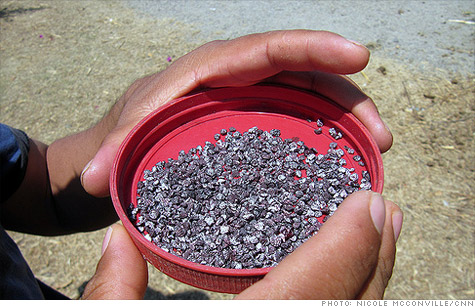
Crushed cochineal extract has been used as a red dye for centuries, but it won't be used for much longer by Starbucks.Crushed cochineal extract has been used as a red dye for centuries, but it won't be used for much longer by Starbucks.

NEW YORK (CNNMoney) -- Want some crushed bugs with your Starbucks frappuccino?

Well, you'd better get on it, because soon it will be too late. The coffee franchise announced that it's phasing out the use of insects as food coloring in its drinks and food products.


Starbucks President Cliff Burrows wrote, in a Thursday blog, that Starbucks is "transitioning" away from the use of an insect called the cochineal.

Burrows blogged that Starbucks "fell short of your expectations by using natural cochineal extract as a colorant in four food and two beverage offerings in the United States."

He identified the products in question as the Strawberries & Crème Frappuccino, Strawberry Banana Smoothie, Raspberry Swirl Cake, Birthday Cake Pop, Mini Donut with pink icing and Red Velvet Whoopie Pie.

Burrows said that use of the insect dye will be "fully transitioned from existing product inventories" by the end of June.

From that point on, he said that Starbucks will use lycopene, a tomato-based extract.

An earlier Burrows blog from March 29 described the cochineal as a natural product, approved by the Food and Drug Administration, with no health risk.

Starbucks spokesman Jim Olson said the company was responding to numerous petitions and individual requests from customers who were concerned about the use of an insect-based extract.

The organization Change.org contacted CNNMoney to claim partial responsibility for pressuring Starbucks with its petition of 6,000 signatures gathered by blogger Daelyn Fortney. The purpose, according to Fortney, was to switch to a "vegan-friendly" extract.

The cochineal has a long history as being used as a red dye, according to Richard Levine, communications 
program manager for the Entomological Society of America.

"The red in the uniforms of the British soldiers during the Revolutionary War came from cochineal dye," he said. "The same goes for the uniforms of the Royal Canadian Mounted Police."

Full Article

Thursday, October 6, 2011

Two Florida Species Declared Extinct


Endangered Species Review Too Late to Save South Florida Rainbow Snake, Florida Fairy Shrimp

JACKSONVILLE, Fla.— The U.S. Fish and Wildlife Service announced today that two Florida species, the South Florida rainbow snake and the Florida fairy shrimp, have been determined to be extinct. The finding came in response to a petition filed by the Center for Biological Diversity in 2010 seeking Endangered Species Act protection for the rainbow snake, fairy shrimp and more than 400 aquatic species in the southeastern United States. Last week the Service announced that 374 other freshwater species in the petition, including 114 in Florida, may warrant protection under Act. All of those species will now get an in-depth review.

“It’s heart-wrenching to learn that these two unique Florida species have been lost forever. Like most species that go extinct, these two were not protected under the Endangered Species Act, which is the most powerful tool we have for saving our nation’s plants and animals from disappearing,” said Tierra Curry, a conservation biologist with the Center.

The South Florida rainbow snake was known only from Fish Eating Creek, which flows into the west side of Lake Okeechobee. The beautiful snake was iridescent bluish-black with red stripes on its back and sides, red and yellow patches on its belly and throat, and a yellow chin. Adults were more than four feet long. It was last seen in 1952.

The Florida fairy shrimp was known from a single pond just south of Gainesville. The pond was destroyed by development, and the species hasn’t been detected elsewhere.

“The government has to determine quickly whether the 114 other Florida species it’s reviewing will get protection so that more of Florida’s heritage isn’t erased by extinction,” said Curry. “The wellbeing of human society is deeply linked to the health of the natural systems we need to sustain life. In the end, saving species will help save us.”

The southeastern United States is home to more unique species of freshwater animals than anywhere else in the world, including mussels, snails and crayfish. Tragically, many of the region’s animals have already been lost to extinction.

Earlier this year the Center reached a landmark legal settlement with the Fish and Wildlife Service to expedite protection decisions for 757 imperiled species across the country.      

Full Story    

Friday, July 8, 2011

Volunteers try to restore Maryland's vanishing butterfly

Baltimore Checkerspots reared in captivity to offset wild declines

  • A Baltimore Checkerspot hangs on the leaf of a turtlehead plant in the Washington home of Pat Durkin.
A Baltimore Checkerspot hangs… (JERRY JACKSON, Baltimore Sun)
July 05, 2011|By Timothy B. Wheeler, The Baltimore Sun
Don't look now, but Maryland's state insect is fluttering away.
The Baltimore Checkerspot butterfly, named for the state's founding Calvert family, has dwindled to just a handful of places, mostly in Western Maryland. Experts worry that the butterfly, once fairly common, may disappear entirely from the state.
Pockets of dedicated butterfly lovers, though, are trying to slow or even reverse the decline by breeding the species in captivity. One such nursery is in a tent in back of an old maintenance shed at Black Hill Regional Park in Montgomery County.
"Here's where the larvae are," said Barbara Kreiley, pointing out tiny caterpillars clinging to the stem of a white turtlehead plant inside the tent. The crawlers are recently hatched and still green, not yet displaying their distinctive orange-and-black markings. "My little babies — see them?"
From a single caterpillar-infested plant collected from the wild last year, Kreiley, a retired nurse, and four other volunteers reared about 250 hatchlings to adulthood. About a month ago, they released them as butterflies, in spots primed to be suitable habitat for the seemingly picky creatures. Since then, patches the women recognize as butterfly eggs have been spied on the undersides of leaves at the release sites, and they have been waiting like expectant parents for them to hatch.

Meanwhile, behind the old maintenance shed, they're already working to step up production for next year, tending to nearly 20 white turtlehead plants inside the tent on which butterflies have laid eggs. Many of the plants have the beginnings of silky "tents" in their tops, spun by newly hatched caterpillars as they feed on the leaves.
Kreiley said it's "awesome, just awesome" how well the group's initial effort has gone, but acknowledges that the real test is yet to come — can the butterflies they released flourish in the wild?
On that score, the record is not encouraging. Others, including the Maryland Zoo in Baltimore, have tried captive breeding and given up after failing to see their "colonies" take hold and sustain themselves year after year. Ruth Eisenhour, a teacher at the Harford Glen Environmental Education Center in Bel Air, said she's had some success raising and releasing the butterflies in Harford County, but she's only been doing it for three years.


Full Story

Tuesday, July 5, 2011

Project MonarchHealth

Project MonarchHealth is a citizen-science survey of the occurrence of the protozoan parasite Ophryocystis elektroscirrha  (OE), which parasitizes monarch butterflies. Best known for their migrations between breeding and wintering sites throughout North America, these butterflies are also found in non-migratory populations in places such as southern Florida. This parasite is not harmful to humans; however, it can harm the butterflies by inhibiting normal growth and lowering butterfly survival in the wild.

To check for parasites, surveyors can swab the abdomen of live butterflies to collect parasite spores. MonarchHealth participants help scientists map the location and infection levels of OE in monarchs throughout the United States and determine how much disease the parasites cause.

The most essential activity is capturing and sampling wild monarchs. Either capture monarch butterflies as adults or raise the caterpillars in separate containers until they become adult butterflies. In either case, you will gently tape each butterfly’s abdomen with a sticker to collect the OE spores. Next, you will send the sample, along with a simple data sheet for each butterfly, back to the scientists at the Altizer lab where they will analyze the sample. After the data are compiled, we will send you the results of your sampling contribution as well as post them on our results page for the public to see.

Full Story

More Details

Thursday, January 27, 2011

Nabokov Theory on Butterfly Evolution Is Vindicated


Roger Vila
A male Acmon blue butterfly (Icaricia acmon). Vladimir Nabokov described the Icaricia genus in 1944.
Vladimir Nabokov may be known to most people as the author of classic novels like “Lolita” and “Pale Fire.” But even as he was writing those books, Nabokov had a parallel existence as a self-taught expert on butterflies.
He was the curator of lepidoptera at the Museum of Comparative Zoology at Harvard University, and collected the insects across the United States. He published detailed descriptions of hundreds of species. And in a speculative moment in 1945, he came up with a sweeping hypothesis for the evolution of the butterflies he studied, a group known as the Polyommatus blues. He envisioned them coming to the New World from Asia over millions of years in a series of waves.

Few professional lepidopterists took these ideas seriously during Nabokov’s lifetime. But in the years since his death in 1977, his scientific reputation has grown. And over the past 10 years, a team of scientists has been applying gene-sequencing technology to his hypothesis about how Polyommatus blues evolved. On Tuesday in the Proceedings of the Royal Society of London, they reported that Nabokov was absolutely right.
“It’s really quite a marvel,” said Naomi Pierce of Harvard, a co-author of the paper.

Nabokov inherited his passion for butterflies from his parents. When his father was imprisoned by the Russian authorities for his political activities, the 8-year-old Vladimir brought a butterfly to his cell as a gift. As a teenager, Nabokov went on butterfly-hunting expeditions and carefully described the specimens he caught, imitating the scientific journals he read in his spare time. Had it not been for the Russian Revolution, which forced his family into exile in 1919, Nabokov said that he might have become a full-time lepidopterist.
In his European exile, Nabokov visited butterfly collections in museums. He used the proceeds of his second novel, “King, Queen, Knave,” to finance an expedition to the Pyrenees, where he and his wife, Vera, netted over a hundred species. The rise of the Nazis drove Nabokov into exile once more in 1940, this time to the United States. It was there that Nabokov found his greatest fame as a novelist. It was also there that he delved deepest into the science of butterflies.

Nabokov spent much of the 1940s dissecting a confusing group of species called Polyommatus blues. He developed forward-thinking ways to classify the butterflies based on differences in their genitalia. He argued that what were thought to be closely related species were actually only distantly related.

At the end of a 1945 paper on the group, he mused on how they had evolved. He speculated that they originated in Asia, moved over the Bering Strait, and moved south all the way to Chile.

Allowing himself a few literary flourishes, Nabokov invited his readers to imagine “a modern taxonomist straddling a Wellsian time machine.” Going back millions of years, he would end up at a time when only Asian forms of the butterflies existed. Then, moving forward again, the taxonomist would see five waves of butterflies arriving in the New World.

Nabokov conceded that the thought of butterflies making a trip from Siberia to Alaska and then all the way down into South America might sound far-fetched. But it made more sense to him than an unknown land bridge spanning the Pacific. “I find it easier to give a friendly little push to some of the forms and hang my distributional horseshoes on the nail of Nome rather than postulate transoceanic land-bridges in other parts of the world,” he wrote.

When “Lolita” made Nabokov a star in 1958, journalists were delighted to discover his hidden life as a butterfly expert. A famous photograph of Nabokov that appeared in The Saturday Evening Post when he was 66 is from a butterfly’s perspective. The looming Russian author swings a net with rapt concentration. But despite the fact that he was the best-known butterfly expert of his day and a Harvard museum curator, other lepidopterists considered Nabokov a dutiful but undistinguished researcher. He could describe details well, they granted, but did not produce scientifically important ideas.

Only in the 1990s did a team of scientists systematically review his work and recognize the strength of his classifications. Dr. Pierce, who became a Harvard biology professor and curator of lepidoptera in 1990, began looking closely at Nabokov’s work while preparing an exhibit to celebrate his 100th birthday in 1999. She was captivated by his idea of butterflies coming from Asia. “It was an amazing, bold hypothesis,” she said. “And I thought, ‘Oh, my God, we could test this.’ ”

To do so, she would need to reconstruct the evolutionary tree of blues, and estimate when the branches split. It would have been impossible for Nabokov to do such a study on the anatomy of butterflies alone. Dr. Pierce would need their DNA, which could provide more detail about their evolutionary history.

Working with American and European lepidopterists, Dr. Pierce organized four separate expeditions into the Andes in search of blues. Back at her lab at Harvard, she and her colleagues sequenced the genes of the butterflies and used a computer to calculate the most likely relationships between them. They also compared the number of mutations each species had acquired to determine how long ago they had diverged from one another.

There were several plausible hypotheses for how the butterflies might have evolved. They might have evolved in the Amazon, with the rising Andes fragmenting their populations. If that were true, the species would be closely related to one another.

But that is not what Dr. Pierce found. Instead, she and her colleagues found that the New World species shared a common ancestor that lived about 10 million years ago. But many New World species were more closely related to Old World butterflies than to their neighbors. Dr. Pierce and her colleagues concluded that five waves of butterflies came from Asia to the New World — just as Nabokov had speculated.

“By God, he got every one right,” Dr. Pierce said. “I couldn’t get over it — I was blown away.”
Dr. Pierce and her colleagues also investigated Nabokov’s idea that the butterflies had come over the Bering Strait. The land surrounding the strait was relatively warm 10 million years ago, and has been chilling steadily ever since. Dr. Pierce and her colleagues found that the first lineage of Polyommatus blues that made the journey could survive a temperature range that matched the Bering climate of 10 million years ago. The lineages that came later are more cold-hardy, each with a temperature range matching the falling temperatures.
Nabokov’s taxonomic horseshoes turn out to belong in Nome after all.

"What a great paper," said James Mallet, an expert on butterfly evolution at University College London. "It's a fitting tribute to the great man to see that the most modern methods that technology can deliver now largely support his systematic arrangement."

Dr. Pierce says she believes Nabokov would have been greatly pleased to be so vindicated, and points to one of his most famous poems, “On Discovering a Butterfly.” The 1943 poem begins:
I found it and I named it, being versed
in taxonomic Latin; thus became
godfather to an insect and its first
describer — and I want no other fame.
 
“He felt that his scientific work was standing for all time, and that he was just a player in a much bigger enterprise,” said Dr. Pierce. “He was not known as a scientist, but this certainly indicates to me that he knew what it’s all about.”


This article has been revised to reflect the following correction:


Story
 

Wednesday, September 29, 2010

Where have all the British botanists gone, just when we need them?

We are desperate for new crops, drugs and energy sources but plant science graduates have become an endangered species, says Professor Steve Jones. 

By Steve Jones 

The Botanic Garden in the University of Oxford. Where have all the British botanists gone, just when we need them?
The Botanic Garden in the University of Oxford. 
 U
Plant scientists have become an endangered species in Britain, says Steve Jones.
'I’d like to see them starving,/The so-called working class,/Their wages yearly halving,/Their women boiling grass”. Thus wrote Philip Larkin in a poem that can have no relevance to Britain today, for he was writing before the era of coalition politics. 
Boiled grass may, in fact, soon be on the menu, because of advances in a science which has revolutionised our lives and yet – at least when it comes to producing a new generation of practitioners – has almost vanished from the British scene. Botany has disappeared as an A-level subject, just 10 universities offer degrees in plant science (at least one is thinking of dropping it) and there are no more than 100 graduates each year. Most places have a grotesque imbalance between researchers using plants and using animals, humans included (a 500-to-one ratio in my own institution).
Yet plants are not just beautiful, diverse and easy to handle, but we depend upon them for food, for fuel, for drugs and (not to be forgotten) for aesthetic sensibility.
Why do students find the vegetable world so boring when without it we would perish? The United States (unlike Britain, where less than a third of our landscape is suitable for crops and we need crop-land twice the size of these islands to feed ourselves) now has enough acreage to grow all the food it might need, plus a bit over. In just 40 years, population growth, urbanisation and loss of soil mean that the amount of fertile land per head will drop by ten times. To guard against that, the Americans are pouring in billions to a plan to double maize yields in two decades. A quarter of all medicines are plant-based, or were discovered in that kingdom, and the need for sustainable fuel has led to the – unsustainable – use of food plants or oil palms to make alcohol-enhanced petrol. New crops, new drugs and new sources of energy are needed but the annual crop of British botany graduates is now so reduced as to make them an endangered species.
Ironically, the technical advances in DNA research that came from the Human Genome Project (and disappointed those who had hoped for a revolution in medicine) has transformed the study of plants. New genes for increased production (such as grass with enough sugar to make it palatable, and clovers that make far more nitrogen fertiliser than before) are emerging fast. Many of our crops, wheat included, are natural hybrids between wild species, and the hunt is on for ways to disrupt the inborn mechanisms that stop other potentially valuable mongrels from being made. Already, distantly related kinds are being persuaded to mate to generate varieties resistant to heat, salt, flooding, drought and to the other good things promised by global warming.
One escape from that problem is to use plants as fuel. Much of the biofuel market is driven by the economics of the madhouse, for subsidies make it profitable to burn crops that could be eaten. Elephant grass is a 15ft Asian giant that can grow on barren land and is four times better than maize at producing fuel. It is already being burned in British power stations, but almost everywhere just one strain is used. Expeditions to Japan and China have found wild varieties that might do the job even better. The plan is to double the plant’s yield and to have one kilowatt in every eight of Britain’s electricity generated from the crop in two decades.
In fact, all these projects are under way in one intellectual hot-house in west Wales. Here I must declare an interest, for I am on its advisory board, and have just returned from my annual visit. The University of Aberystwyth’s Institute of Biological Environmental and Rural Sciences is a world centre for the new plant science – but even there it is hard to attract school-leavers to study the subject and to find funds to pay for it.
In spite of the astonishing progress being made there and in other great research centres such as Norwich, Nottingham, Cambridge and Oxford, none of their work has more relevance for the future than does an agricultural adage from before science began: that, both for plants and for the people who study them, to eat the seed corn today will be to starve tomorrow.
Steve Jones is Professor of Genetics at University College London

Story 


Thursday, August 19, 2010

Bronx Zoo ships 100 rare Kihansi spray toads to Tanzania to help create a new colony

Wednesday, August 18th 2010, 4:00 AM
The Kihansi spray toad has vanished from it's native habitat in Tanzania.
Maher, WCS/AP
The Kihansi spray toad has vanished from it's native habitat in Tanzania.
The cargo wasn't just precious - it was almost extinct.
An official from the Wildlife Conservation Society's Bronx Zoo flew to Tanzania last week with some seriously exotic carry-on luggage: 100 rare, tiny toads.
The Kihansi spray toad has vanished from its native habitat, and scientists hope to create a new colony by importing some from U.S. zoos.
"It's an amazing feeling," said Jim Breheny, director of the Bronx Zoo.
Last Tuesday, their handler, Alyssa Borek, packed 50 toads from the Bronx Zoo and 50 from the Toledo Zoo into plastic deli containers after swaddling them in paper towels soaked in purified water.
They were loaded into two cardboard boxes that Borek hauled onto a KLM Royal Dutch Airlines jet for the trip from Kennedy Airport to Africa.
She delivered them to a state-of-the-art propagation center. The goal is to eventually move them to the Kihansi Gorge, where the Tanzanian government has installed sprinklers in an attempt to recreate the toads' habitat.
The toads were discovered in 1998, living on less than five acres of a spray zone created by waterfalls in the gorge.
The 2000 opening of a hydroelectric dam, which provides a third of Tanzania's electricity, reduced the flow of the waterfalls, eliminating 90% of the mist.
The toads began to dry out and fall ill. Before they were declared extinct in the wild, scientists collected a colony of them and split them among a handful of zoos.
The Bronx Zoo pumps 1,500 gallons of mist a day to the toads, who are on display in the Reptile House. Food, water and air is carefully purified.
Breheny called it an "incredible commitment" that he and Toledo Zoo officials hope will pay off halfway across the world. "We both have worked very hard for a successful end to the story," he said.

Tuesday, October 20, 2009

Common pills, plastics making male fish lay eggs

WASHINGTON: Plastics, pesticides and even common prescription drugs are releasing synthetic and natural hormones into rivers and streams, which is leading to unintended consequences on wildlife, causing some male fish to become feminised and lay eggs.

In a recent report, it was found that one third of small mouth bass were feminised in nine major U.S. river basins, and almost all of the rivers and streams tested in the United States contained some hormonally active chemicals.

And now in a conference, the researchers are focusing on the long-term consequences of hormones and endocrine disruptors in the environment.

"It is one of the hottest topics in environmental biology right now. The biological activity of these compounds both in terms of other species and, potentially, ourselves is something that scientists are becoming more and more aware of through research," said Dr. John McLachlan, director of the Tulane/Xavier Center for Bioenvironmental Research, which is hosting the conference.

Now scientists are looking at the proliferation of prescription drugs like antidepressants, contraceptives and other medications that are ending up in waste water after being taken by people.

Most municipal water treatment systems don't have the ability to neutralize pharmaceutical compounds in waste water so they end up in rivers and streams, said McLachlan.

"They all end up in different places in the environment. What do they do to the wildlife that absorb them and, more importantly, what do they do to our water sources?" he says.

A recent study found feminised male fish in almost a third of 111 sampling sites in nine major U.S. river basins and scientists are studying whether endocrine disruptors are responsible.

Tyron Hayes, a leading expert in inter sexed amphibians, will be speaking at the conference about his research on the effects of endocrine disruptors on wildlife.

The conference also discusses how hormones affect the body and endocrine system and how they may play a role in diseases like breast cancer.

The findings will be discussed in the Tenth International Symposium on Environment and Hormones (E.hormone 2009).

Story

Saturday, June 13, 2009

Monarchs get radio tags

High hopes pinned on tiny creatures
National Geographic film crew members Charlie Miller, from left, Eddie O’Connor and Bob Poole grab footage as Martin Wikelski, associate professor of ecology and evolutionary biology at Princeton University, and Chip Taylor, director of Monarch Watch, attach a radio transmitter tag to a monarch butterfly Wednesday at the Lawrence Municipal Airport. National Geographic came along to film the tagging and tracking process for a segment on migrations.

National Geographic film crew members Charlie Miller, from left, Eddie O’Connor and Bob Poole grab footage as Martin Wikelski, associate professor of ecology and evolutionary biology at Princeton University, and Chip Taylor, director of Monarch Watch, attach a radio transmitter tag to a monarch butterfly Wednesday at the Lawrence Municipal Airport. National Geographic came along to film the tagging and tracking process for a segment on migrations.


May 21, 2009

History was made Wednesday in Lawrence, and it was all due to some winged visitors making their way through town.

“What we’re going to try to do is something that’s never been done before, and that’s put radio tags on monarch butterflies, try to get them to fly. Hopefully, we’ll be able to follow them in the airplane and see where they go,” said Chip Taylor, director of Monarch Watch at Kansas University.

Martin Wikelski, associate professor of ecology and evolutionary biology at Princeton University and Chip Taylor, director of Monarch Watch attach a radio transmitter tag to a monarch butterfly Wednesday, May 20, 2009 at the Lawrence Municipal Airport. Taylor and Wikelski attached the tracking device to several monarchs to test the piece of microtechnology in the field. National Geographic came along to film the tagging and tracking process for a segment on migrations.

Martin Wikelski, associate professor of ecology and evolutionary biology at Princeton University and Chip Taylor, director of Monarch Watch attach a radio transmitter tag to a monarch butterfly Wednesday, May 20, 2009 at the Lawrence Municipal Airport. Taylor and Wikelski attached the tracking device to several monarchs to test the piece of microtechnology in the field. National Geographic came along to film the tagging and tracking process for a segment on migrations.

Lawrence is a regular stop for the butterflies on their northward migration from Mexico.

National Geographic was in town to film the radio tagging for a new series, “Great Migration.”

Princeton University professor and biologist Martin Wikelski has used radio transmitters to track the journeys of other species, but never before has the migration of the monarch been investigated using this technology.

Wikelski, Taylor and the National Geographic crew were at the Lawrence Municipal Airport with their six-legged subjects. First, they fed the butterflies to make sure they had energy to carry the transmitters that would be attached to their bodies. The transmitters weigh about half as much as a butterfly does, which Taylor described as “startling” to the butterfly.

After releasing a newly accessorized butterfly, Taylor and Wikelski went up in a two-passenger plane for about 45 minutes to follow its signal.

“It moved a little bit to the north-northeast, which is what we expected,” said an excited Taylor post-flight.

They will be releasing more butterflies today in, hopefully, less windy conditions.

“This is the first step, and after we get through (Thursday), we’ll talk about where to take this then,” Taylor said.

Radio Tagging Monarch Butterflies by Vijay Barve

LJWorkd